公鸡
gōngjī
Rooster · trad. 公雞
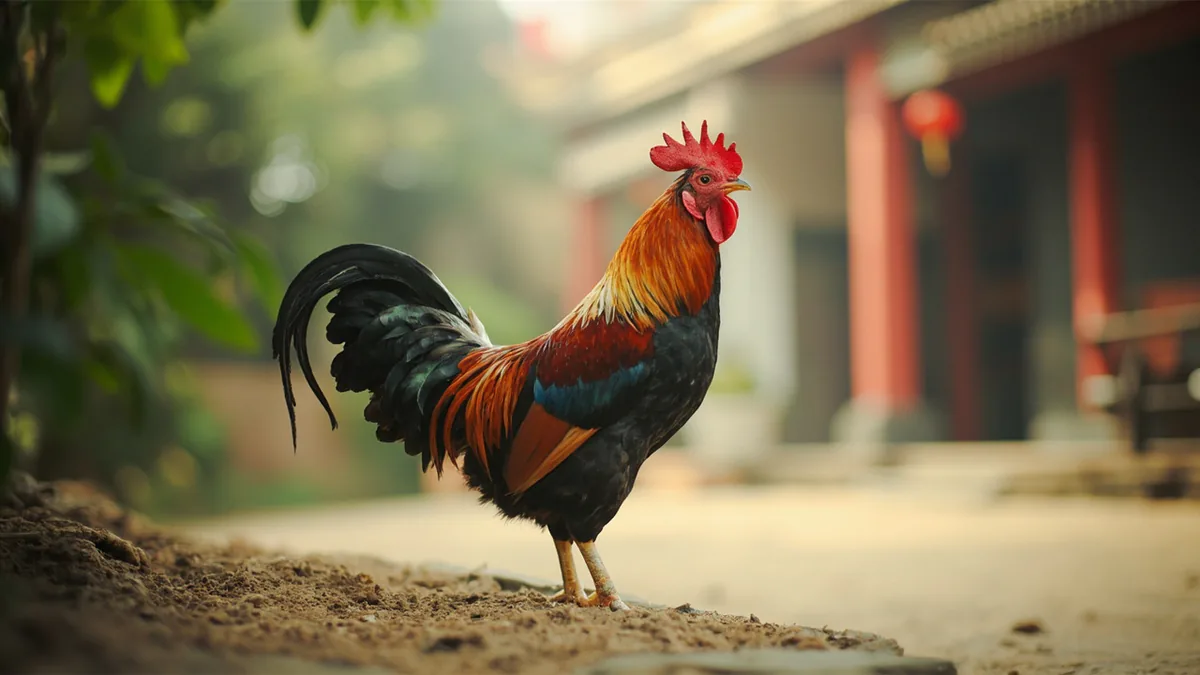
公鸡 (gōngjī) is the word for a rooster, specifically a male chicken. It is often used to distinguish it from a hen (母鸡).
What does 公鸡 (gōngjī) mean?
公鸡 (gōngjī) means “rooster” in English. Word for word, it breaks down as “male chicken.”
When to use it
Neutral and commonly used. While 公鸡 refers to the male bird, the general word for "chicken" or the zodiac animal is simply 鸡 (jī). For example, "Year of the Rooster" is 鸡年, not 公鸡年.
How to pronounce it
Sounds like “GONG-jee.” Both syllables have a high, flat tone.
Other ways to say it
- 母鸡mǔjīhen
- 鸡jīchicken (general, also the zodiac animal)
- 小鸡xiǎojīchick
Examples
那只公鸡每天早上都会打鸣。
nà zhī gōngjī měitiān zǎoshang dōu huì dǎmíng.
That rooster crows every morning.
农场里有几只公鸡和很多母鸡。
nóngchǎng lǐ yǒu jǐ zhī gōngjī hé hěn duō mǔjī.
There are a few roosters and many hens on the farm.
我属鸡,你呢?
wǒ shǔ jī, nǐ ne?
I was born in the Year of the Rooster. How about you?
Pro tip: Remember that while 公鸡 means "rooster," the zodiac animal is just 鸡 (jī), meaning "chicken." Don't say 公鸡年 for "Year of the Rooster."
Related phrases
山羊 · Goat猴子 · Monkey猪 · Pig
Want to speak Chinese for real?
Start a free lesson with a native teacher →
Start a free lesson with a native teacher →