猴子
hóuzi
Monkey
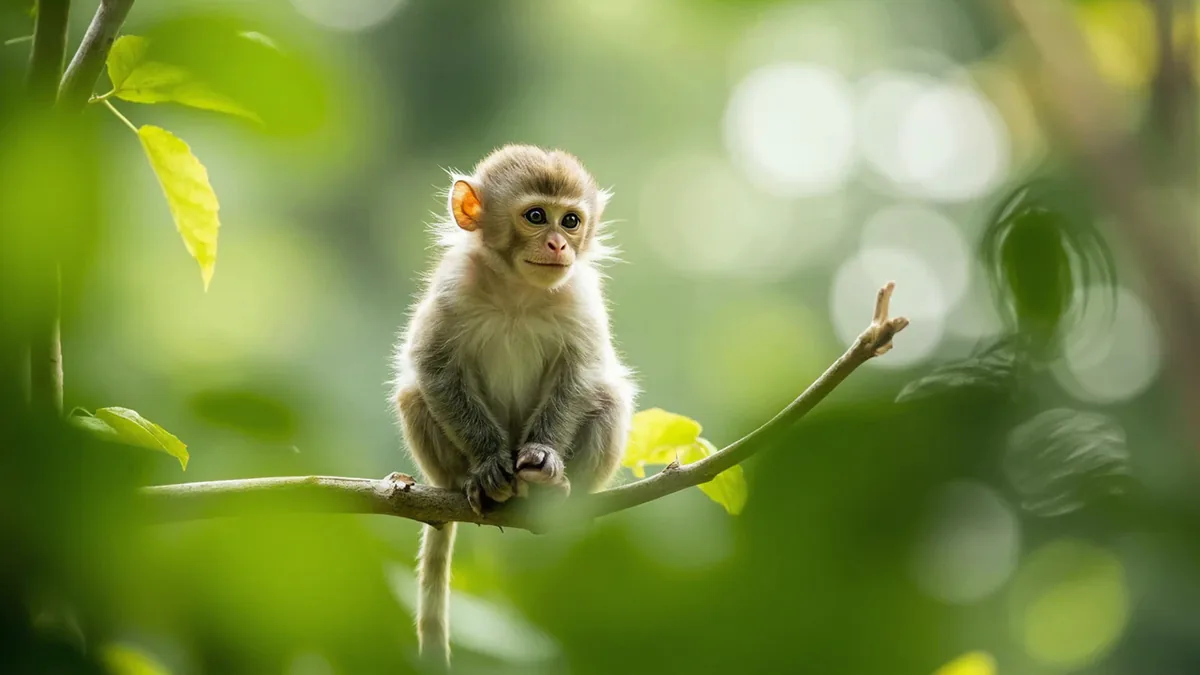
猴子 (hóuzi) is the common, everyday word for "monkey" in Mandarin Chinese. It refers to the animal itself.
What does 猴子 (hóuzi) mean?
猴子 (hóuzi) means “monkey” in English. Word for word, it breaks down as “monkey child.”
When to use it
Neutral and appropriate for all everyday contexts. When referring to the zodiac animal, the character 猴 (hóu) is used on its own, for example, in 猴年 (hóunián, Year of the Monkey) or 我属猴 (wǒ shǔ hóu, My zodiac sign is the Monkey).
How to pronounce it
Sounds like “HO-dzuh.” The first syllable has a rising tone, and the second is light and unstressed (neutral tone).
Other ways to say it
- 猴hóumonkey (as a zodiac animal or in compounds)
- 小猴子xiǎo hóuzilittle monkey (often affectionate)
- 猴年hóuniánYear of the Monkey (zodiac)
Examples
动物园里有很多猴子。
dòngwùyuán lǐ yǒu hěn duō hóuzi.
There are many monkeys in the zoo.
这只猴子很聪明。
zhè zhī hóuzi hěn cōngming.
This monkey is very smart.
我属猴,你呢?
wǒ shǔ hóu, nǐ ne?
My zodiac sign is the Monkey, how about you?
Pro tip: Remember that 猴子 is for the animal, while 猴 is used for the zodiac sign or in compound words like 猴年 (Year of the Monkey).
Related phrases
马 · Horse山羊 · Goat公鸡 · Rooster
Want to speak Chinese for real?
Start a free lesson with a native teacher →
Start a free lesson with a native teacher →