China Travel Cards16 phrases to screenshot and show a local
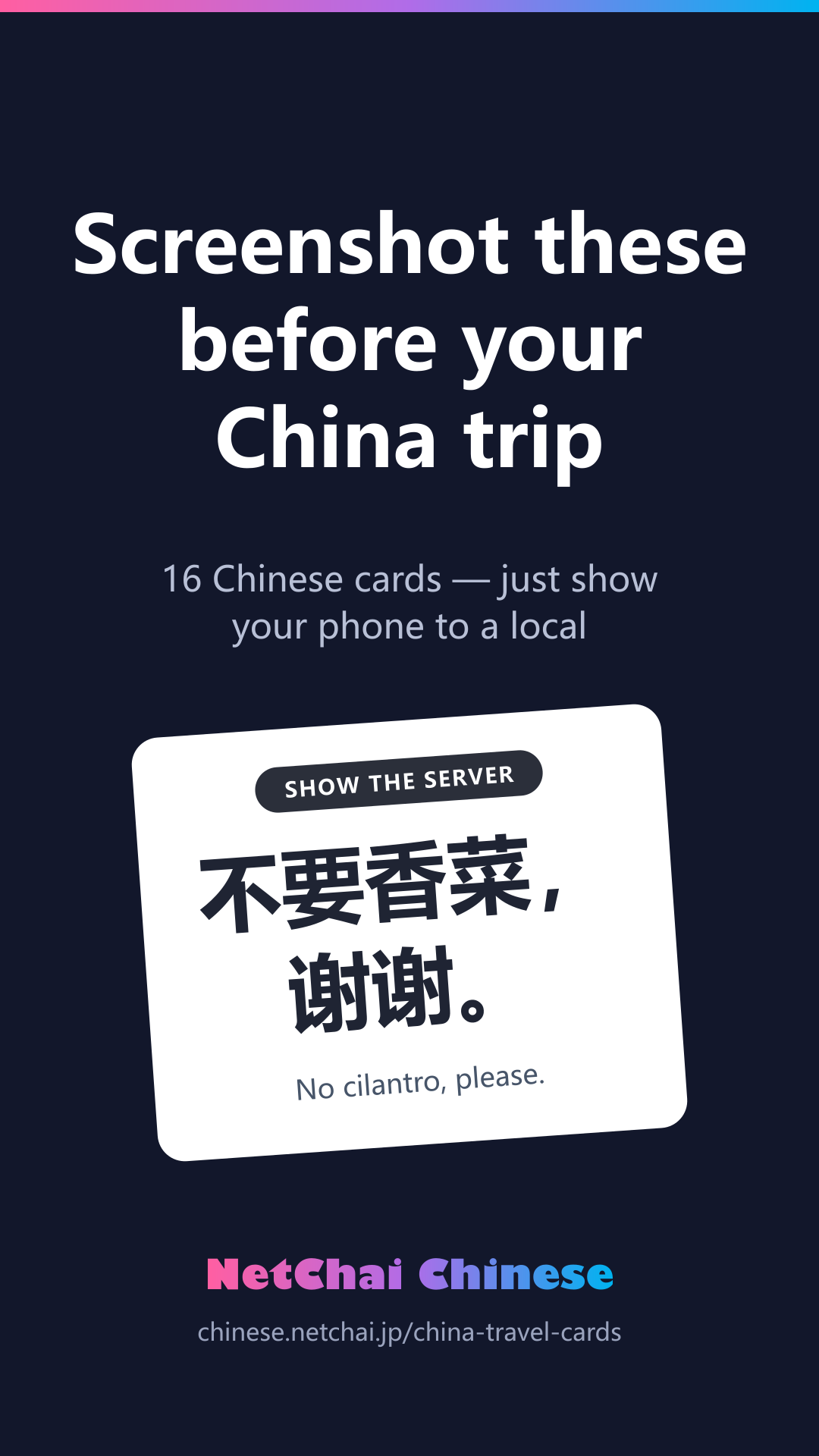
Don't speak Chinese? You don't have to. Save these cards to your phone before you fly, then simply show the screen to a taxi driver, server or shop assistant. Each card has big, clear Chinese for the person you're showing, plus pinyin, English and a native teacher's audio for you.
How to use the cards
- Tap a card to open the full-size image, then save it (long-press on a phone) or take a screenshot.
- Put the cards in a photo album called "China" so you can find them without Wi-Fi or a VPN.
- Hold the phone up and smile. Most people will nod, point or type a reply on their own phone.
- Want to try saying it? Press play and copy the teacher. Even a clumsy 谢谢 (xièxie, thank you) goes a long way.
Talking
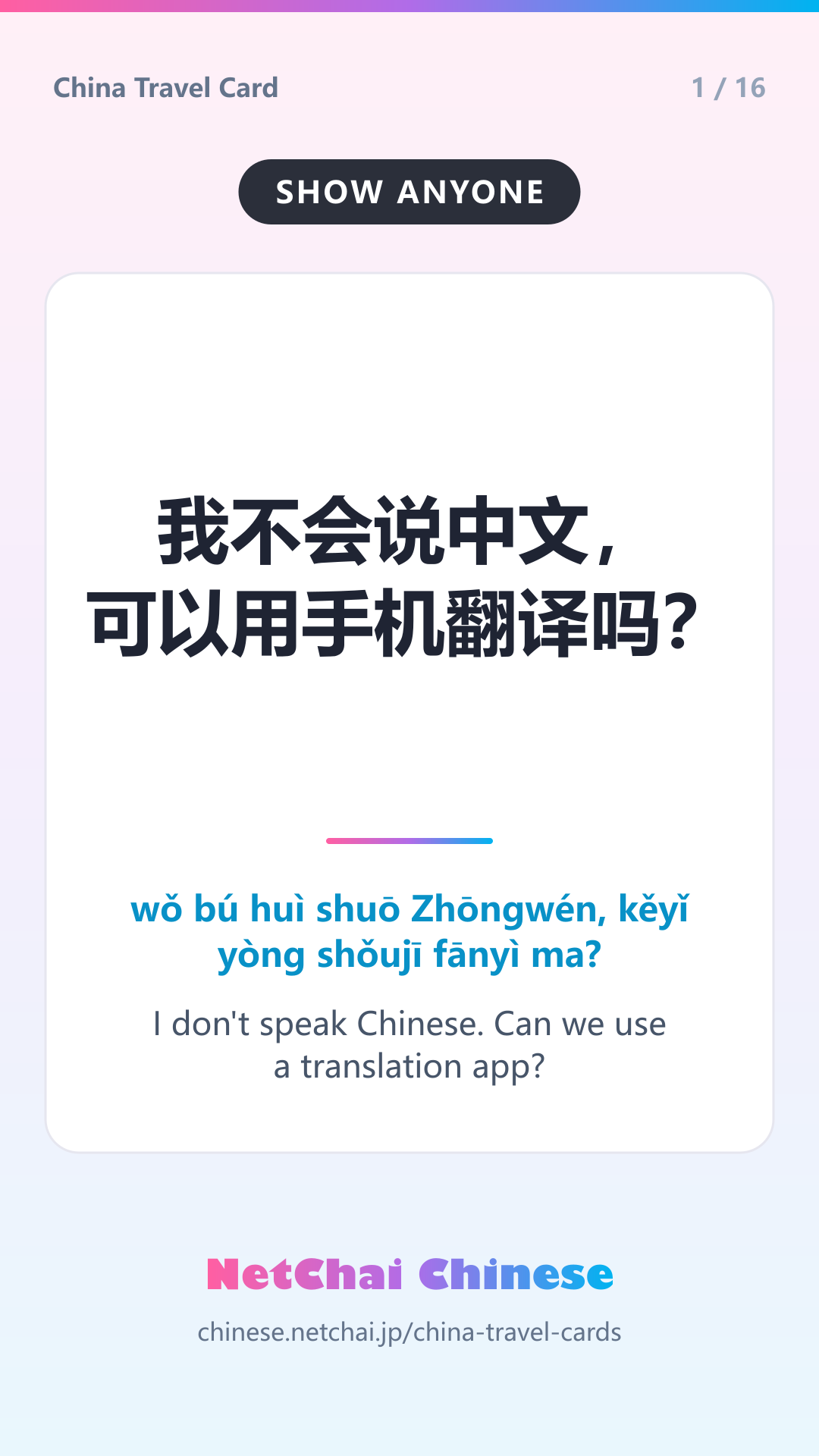
我不会说中文,可以用手机翻译吗?
wǒ bú huì shuō Zhōngwén, kěyǐ yòng shǒujī fānyì ma?
I don't speak Chinese. Can we use a translation app?
Start with this one. Most people in China are happy to type into a translation app on their phone.
Getting around
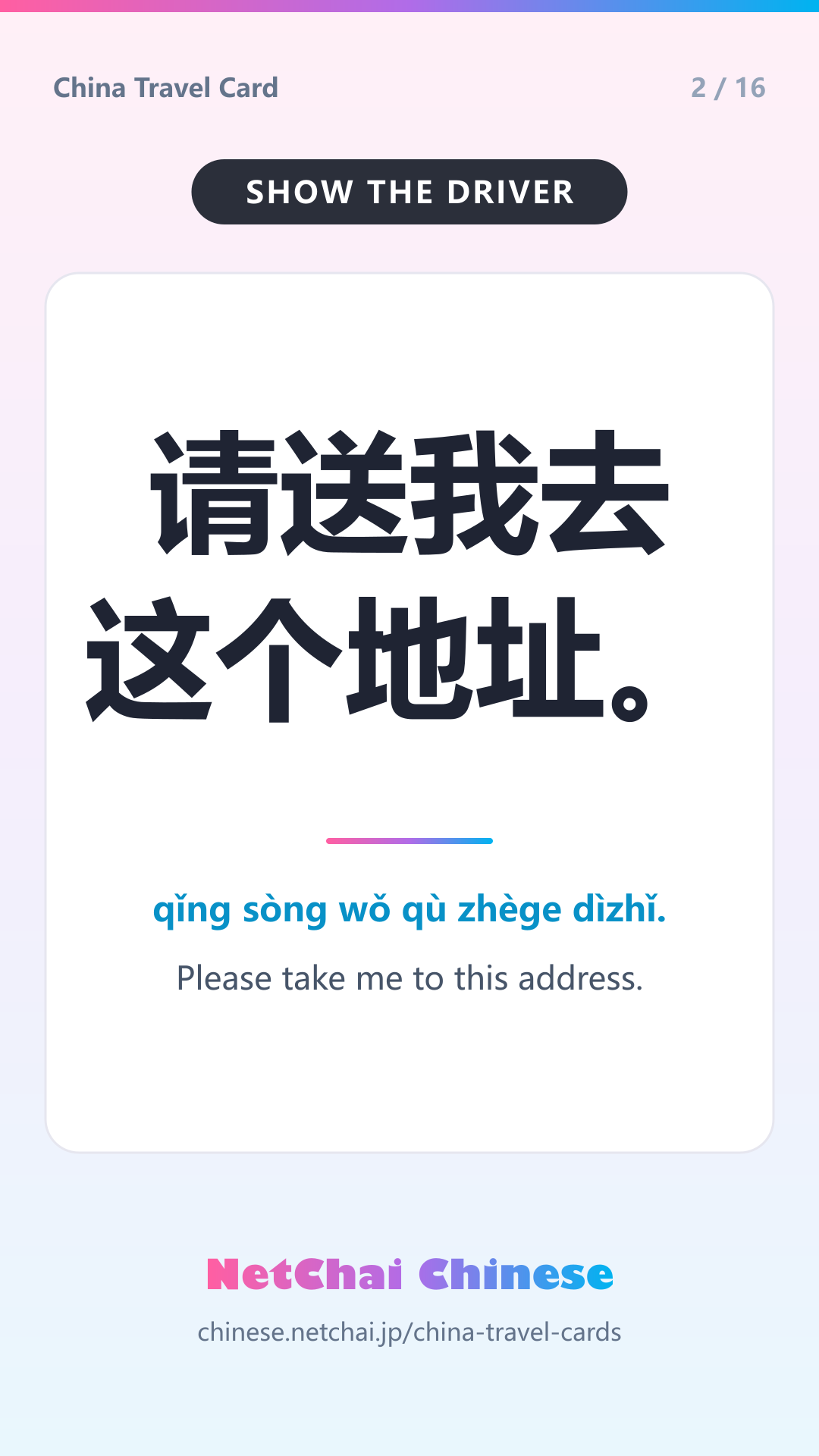
请送我去这个地址。
qǐng sòng wǒ qù zhège dìzhǐ.
Please take me to this address.
Show it together with your hotel's address written in Chinese. English addresses rarely help.
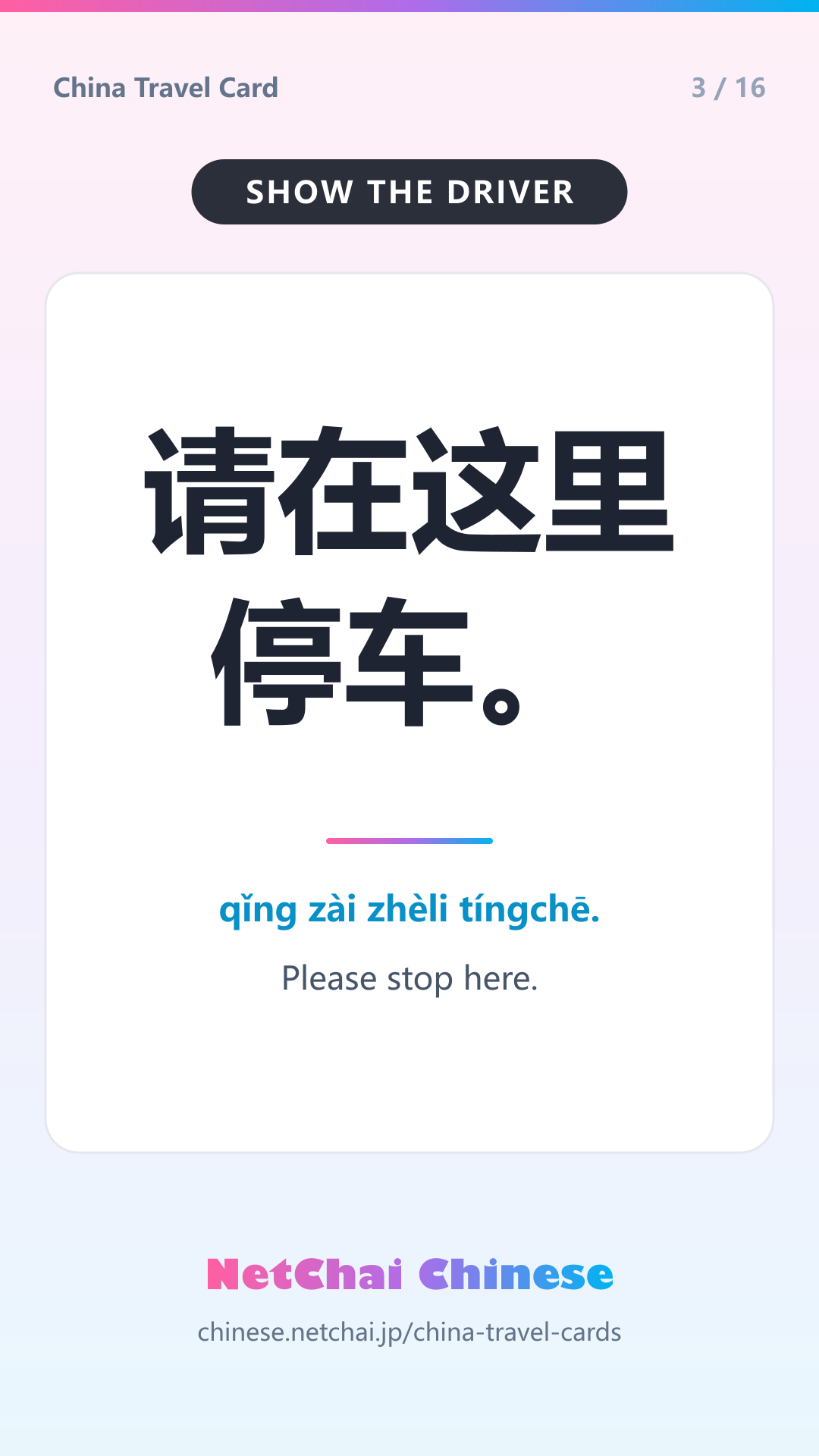
请在这里停车。
qǐng zài zhèli tíngchē.
Please stop here.
Useful in taxis and ride-hailing cars when you spot your destination before the map pin.
Finding your way
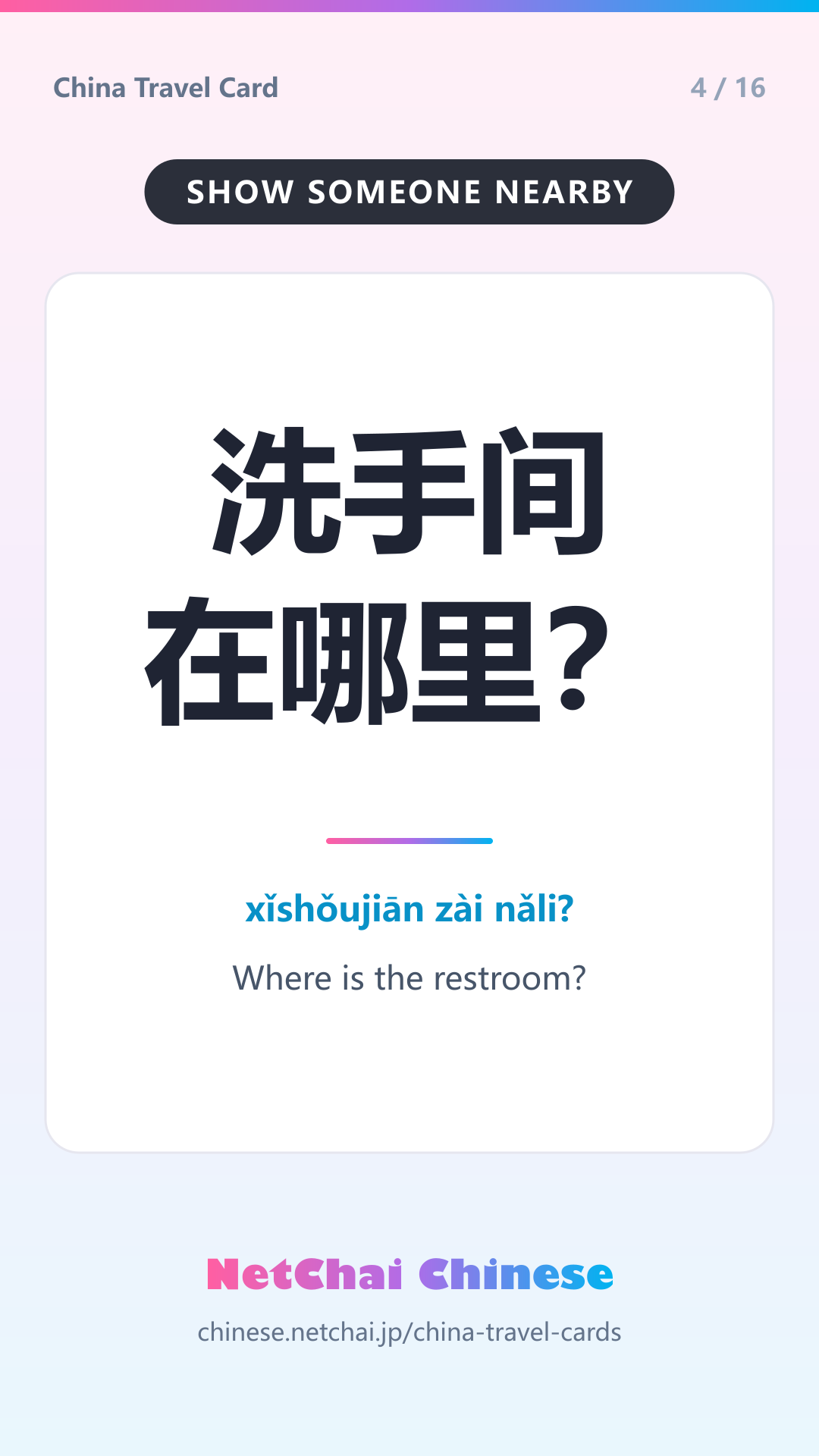
洗手间在哪里?
xǐshǒujiān zài nǎli?
Where is the restroom?
洗手间 is the polite word. Many public restrooms have squat toilets, so carry tissues.
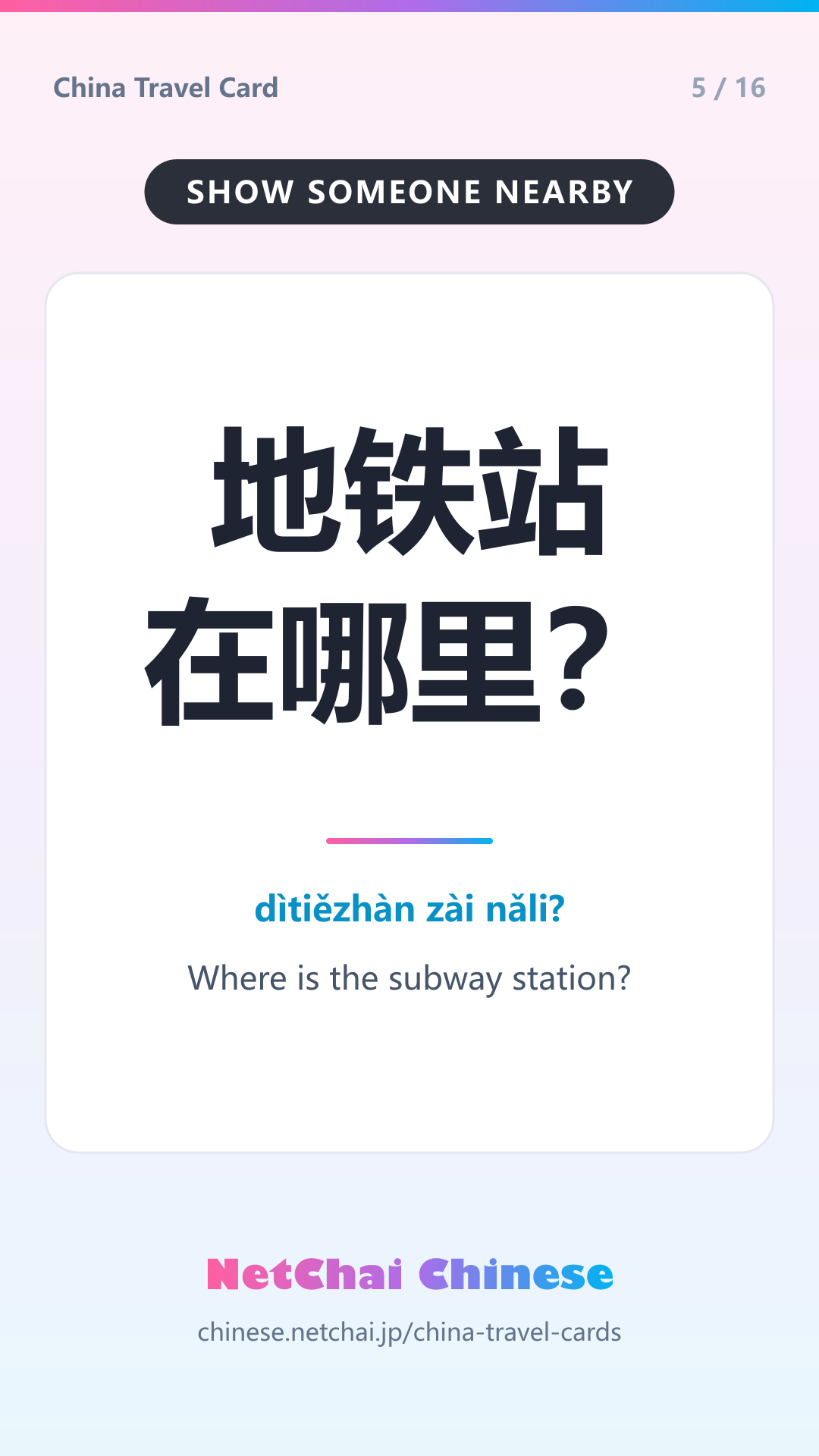
地铁站在哪里?
dìtiězhàn zài nǎli?
Where is the subway station?
Look for the city's metro logo at the entrance. Station names are also written in pinyin, so you can match them to your map.
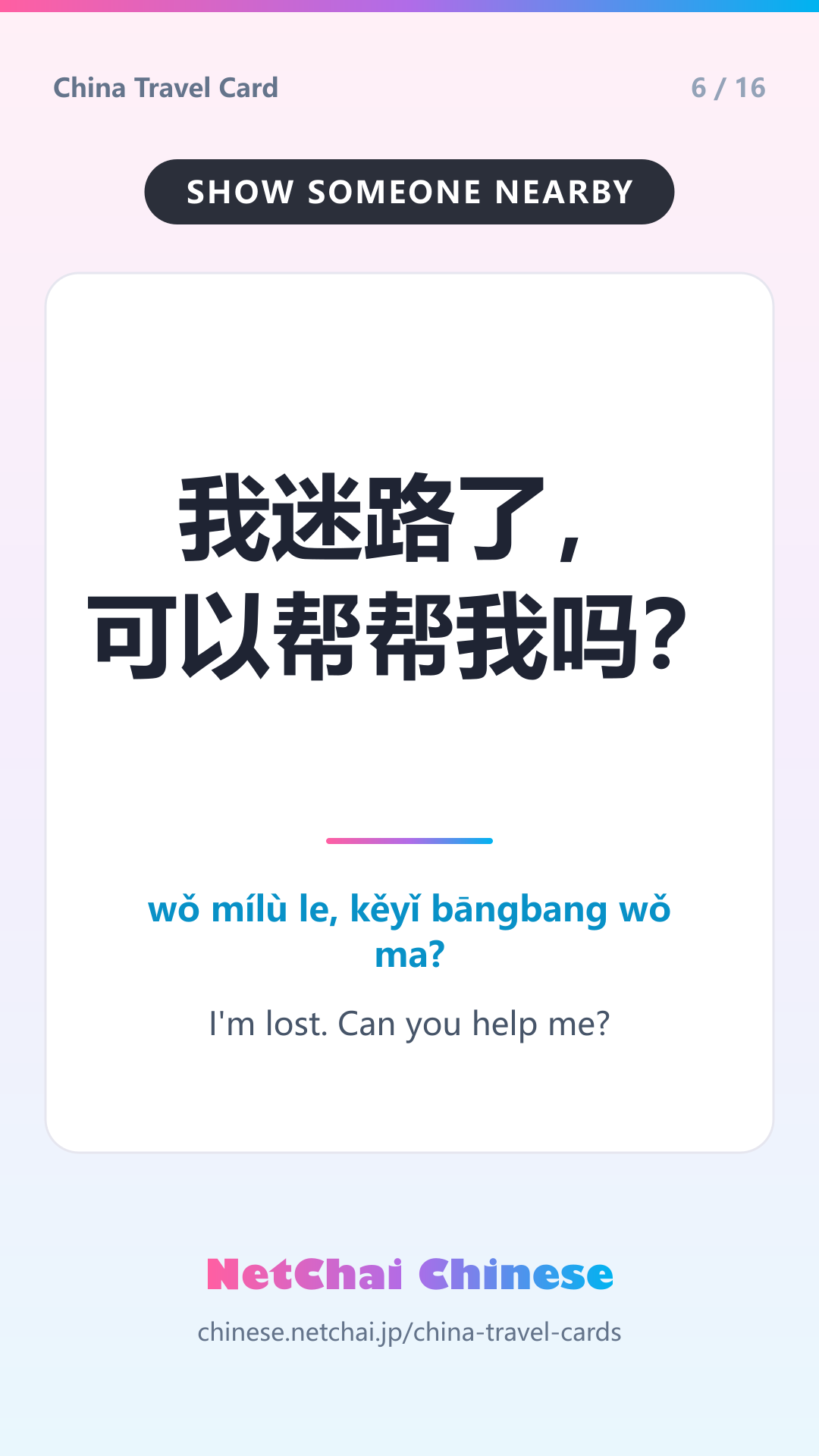
我迷路了,可以帮帮我吗?
wǒ mílù le, kěyǐ bāngbang wǒ ma?
I'm lost. Can you help me?
Shop staff and security guards are good people to ask.
Paying
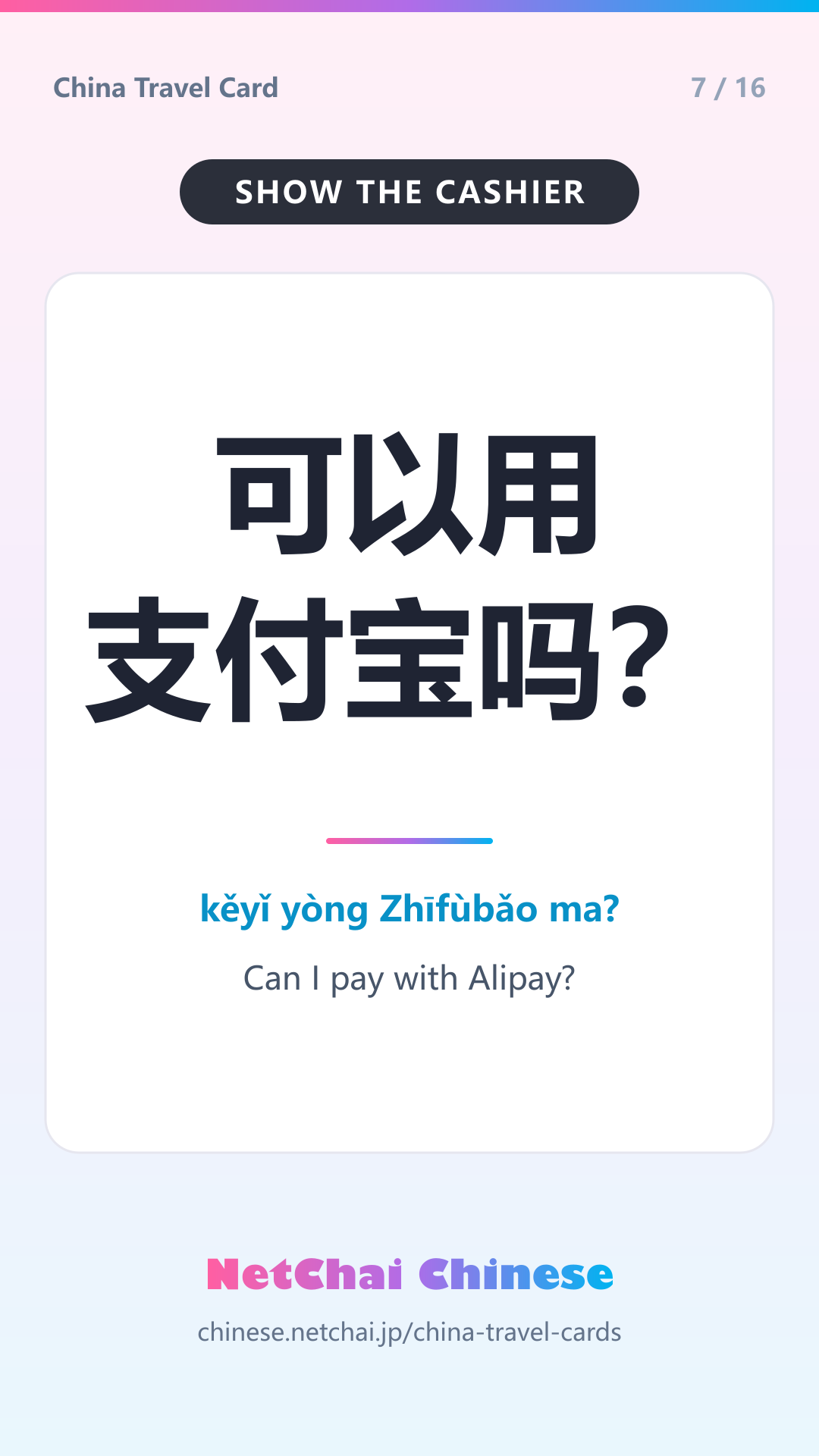
可以用支付宝吗?
kěyǐ yòng Zhīfùbǎo ma?
Can I pay with Alipay?
Mobile payment is everywhere in China. Set up Alipay or WeChat Pay with your foreign card before you go.
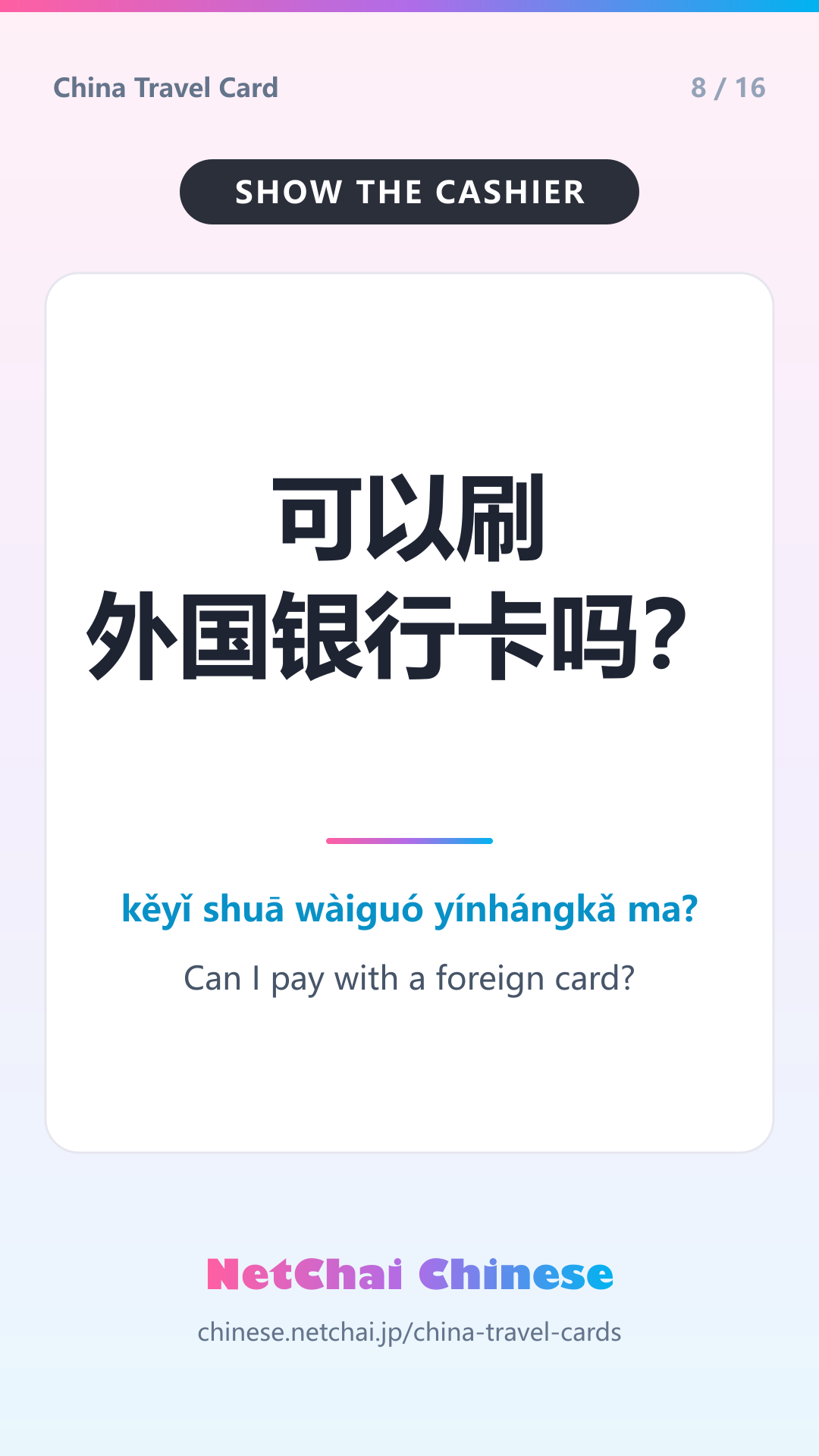
可以刷外国银行卡吗?
kěyǐ shuā wàiguó yínhángkǎ ma?
Can I pay with a foreign card?
Hotels and big stores often accept foreign cards; small shops usually don't. Keep some cash as a backup.
Eating out
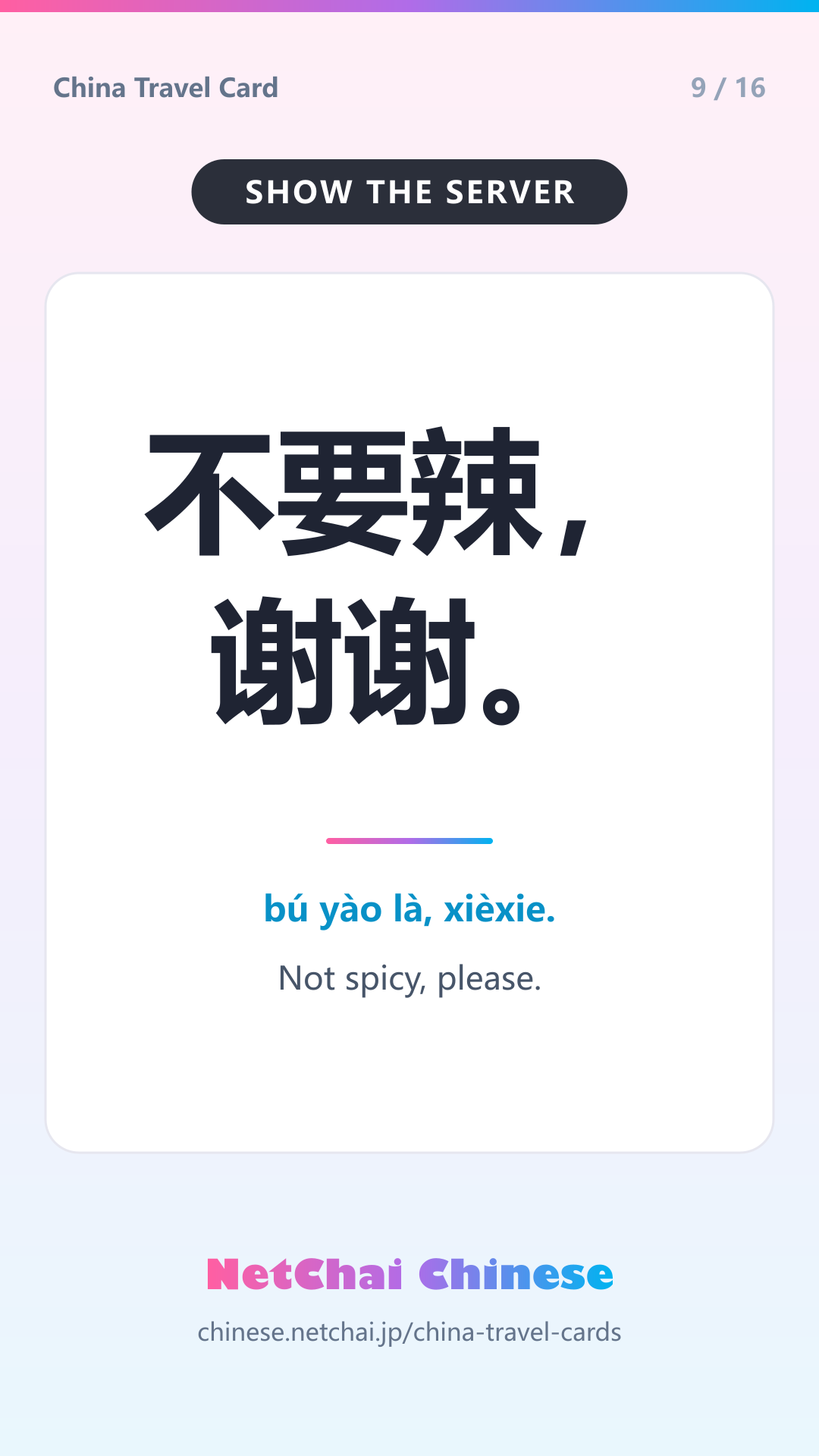
不要辣,谢谢。
bú yào là, xièxie.
Not spicy, please.
Some dishes are spicy by nature, so the kitchen may only make them milder.
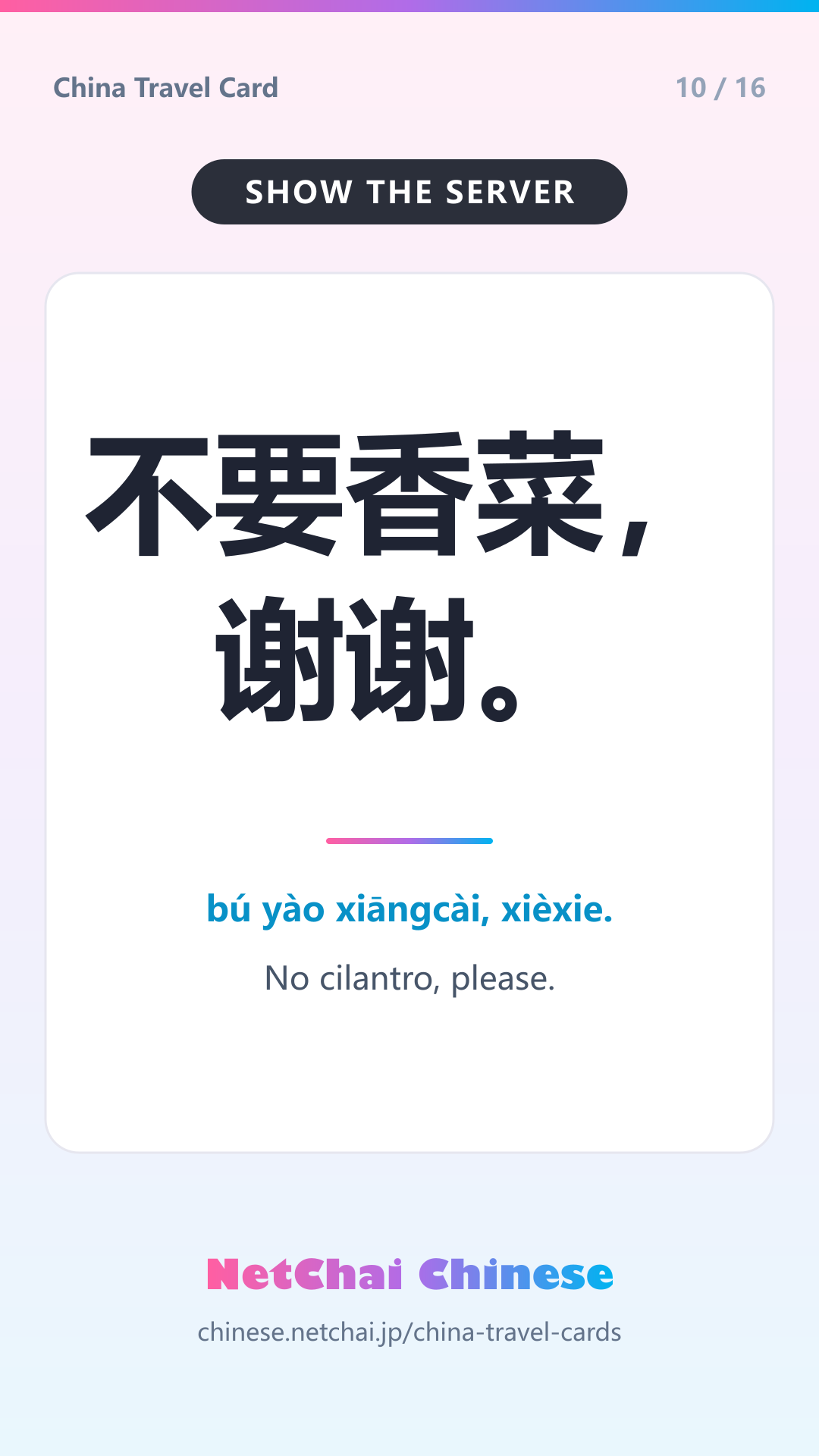
不要香菜,谢谢。
bú yào xiāngcài, xièxie.
No cilantro, please.
Cilantro (coriander) is sprinkled on many noodle soups and street foods. Show this when you order.
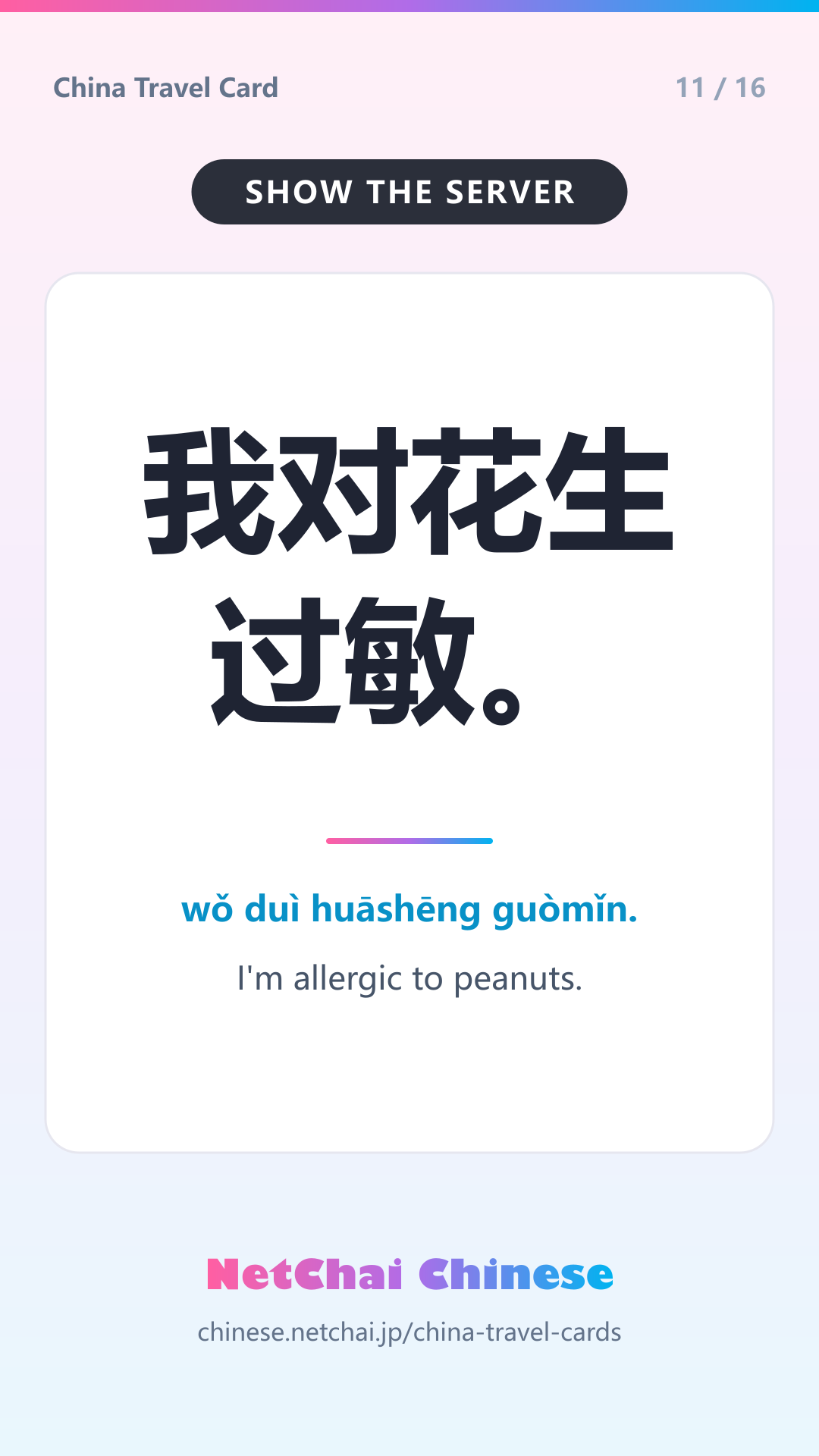
我对花生过敏。
wǒ duì huāshēng guòmǐn.
I'm allergic to peanuts.
Peanuts and peanut oil are common in Chinese cooking. For a serious allergy, also carry a printed note.
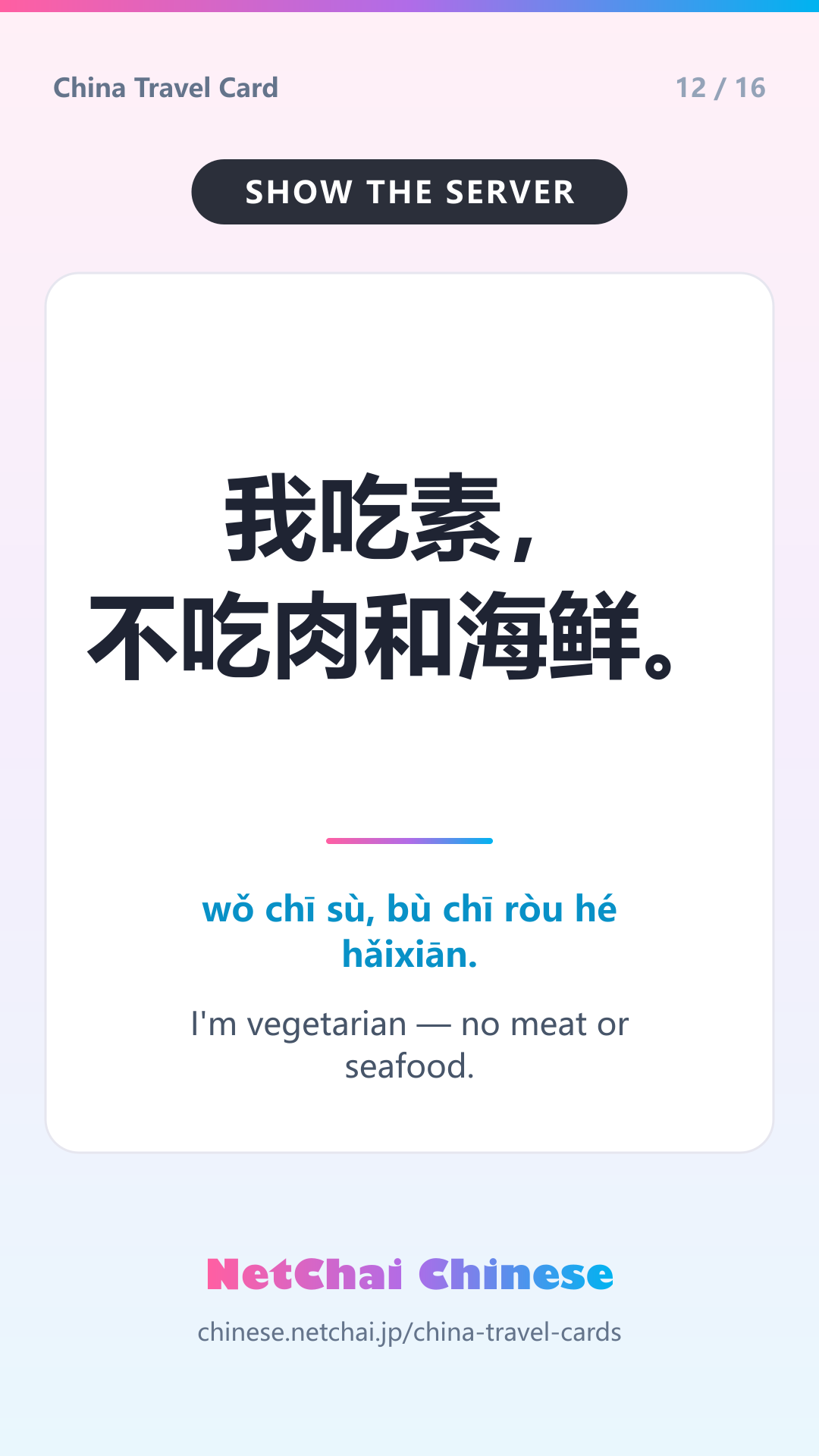
我吃素,不吃肉和海鲜。
wǒ chī sù, bù chī ròu hé hǎixiān.
I'm vegetarian — no meat or seafood.
Saying you don't eat seafood too avoids dishes made with fish sauce or dried shrimp.
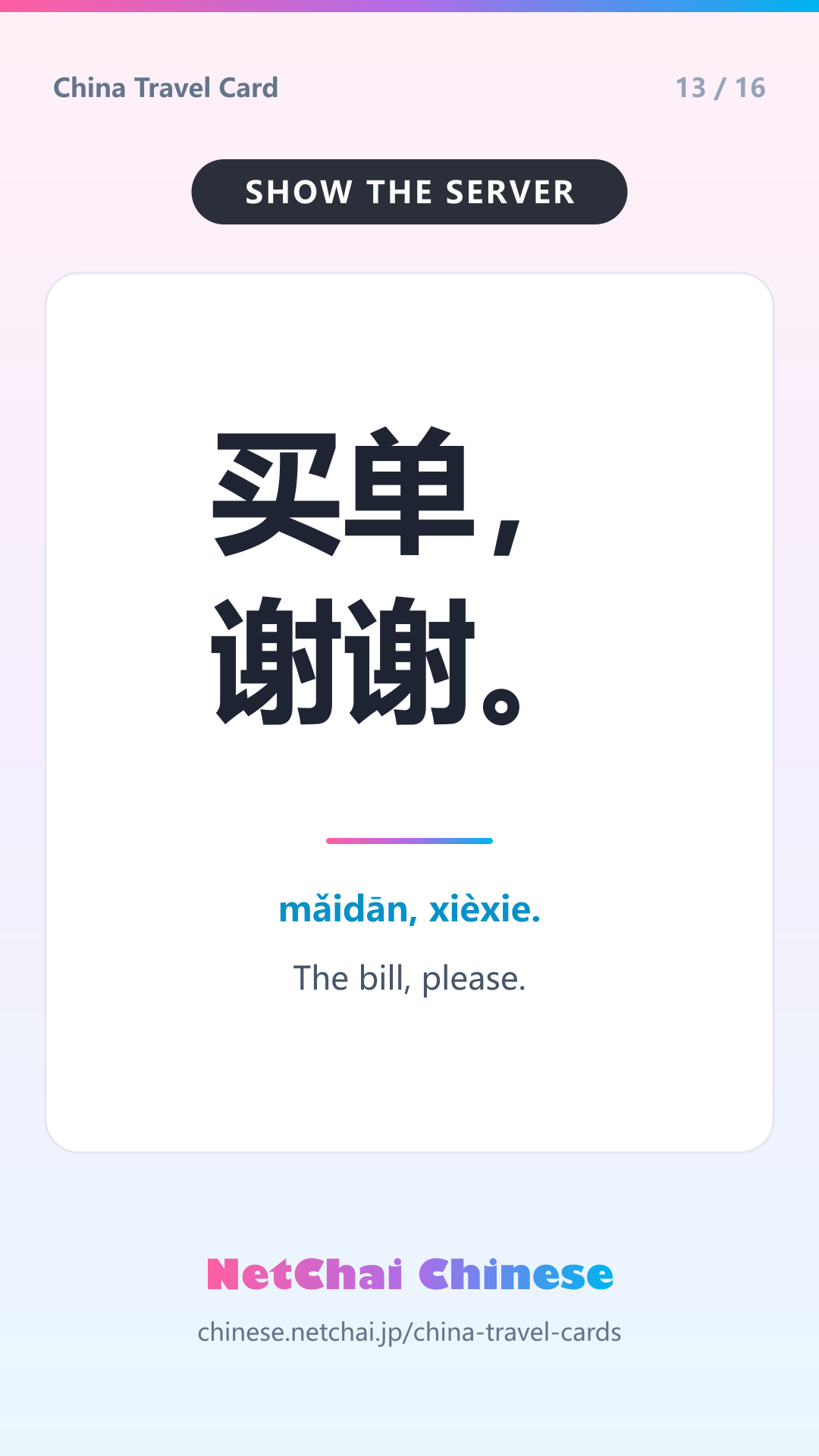
买单,谢谢。
mǎidān, xièxie.
The bill, please.
In many restaurants you pay at the counter or by scanning the QR code on your table.
At the hotel
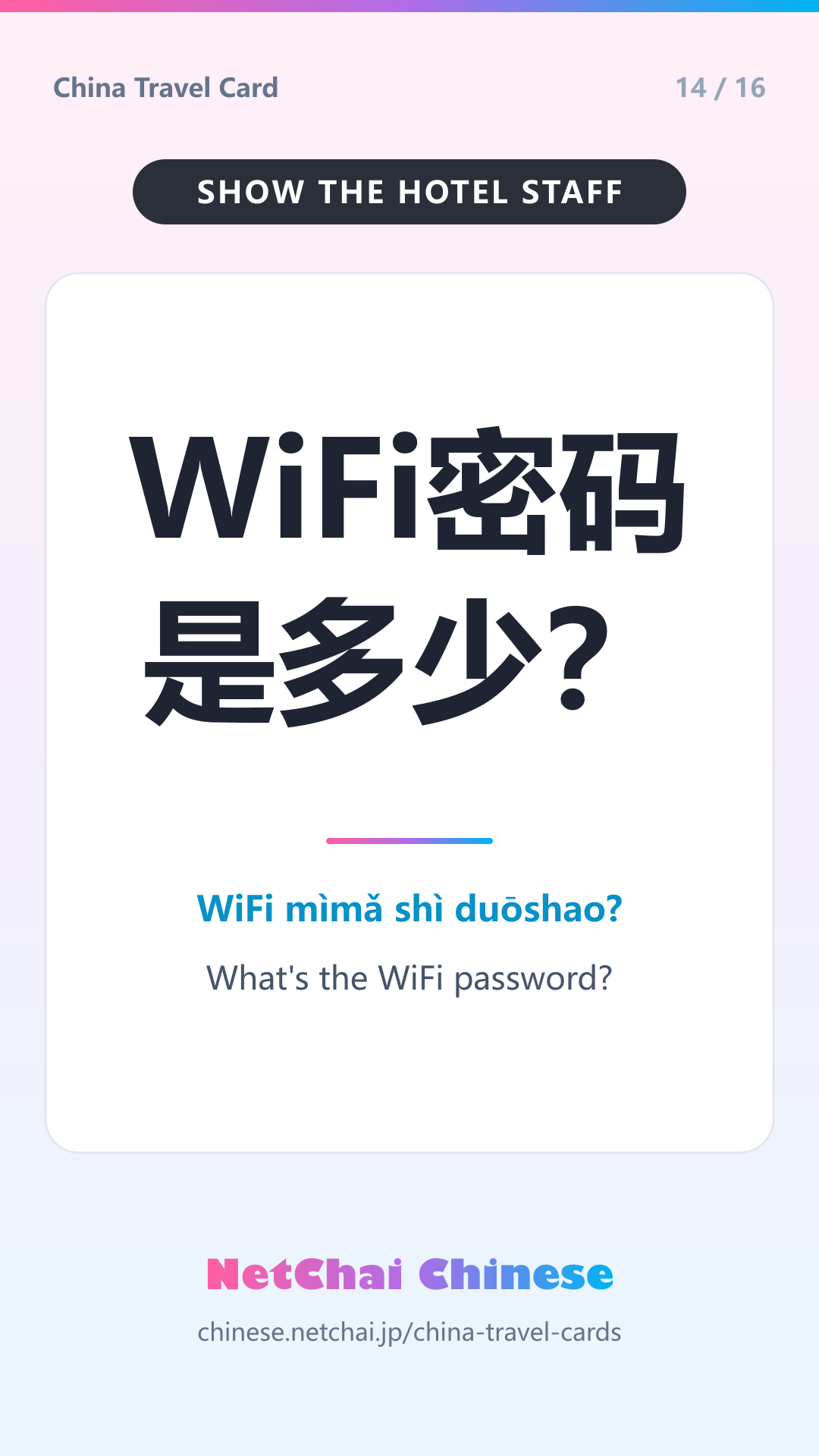
WiFi密码是多少?
WiFi mìmǎ shì duōshao?
What's the WiFi password?
Cafés and hotels often print the password on the receipt or a table card, so check there first.
Health
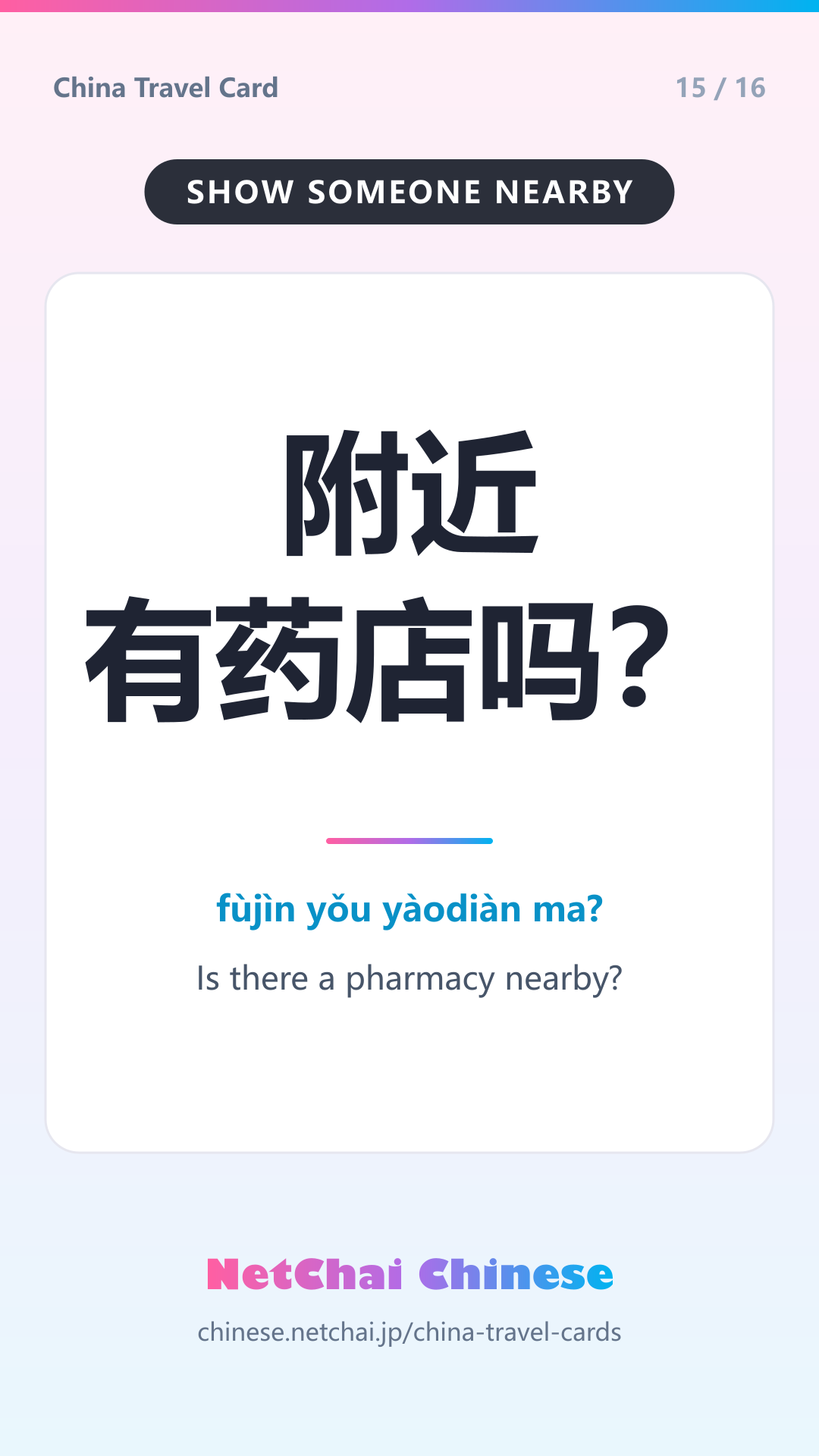
附近有药店吗?
fùjìn yǒu yàodiàn ma?
Is there a pharmacy nearby?
Pharmacies have a green cross sign. Bring photos of your usual medicine packaging.
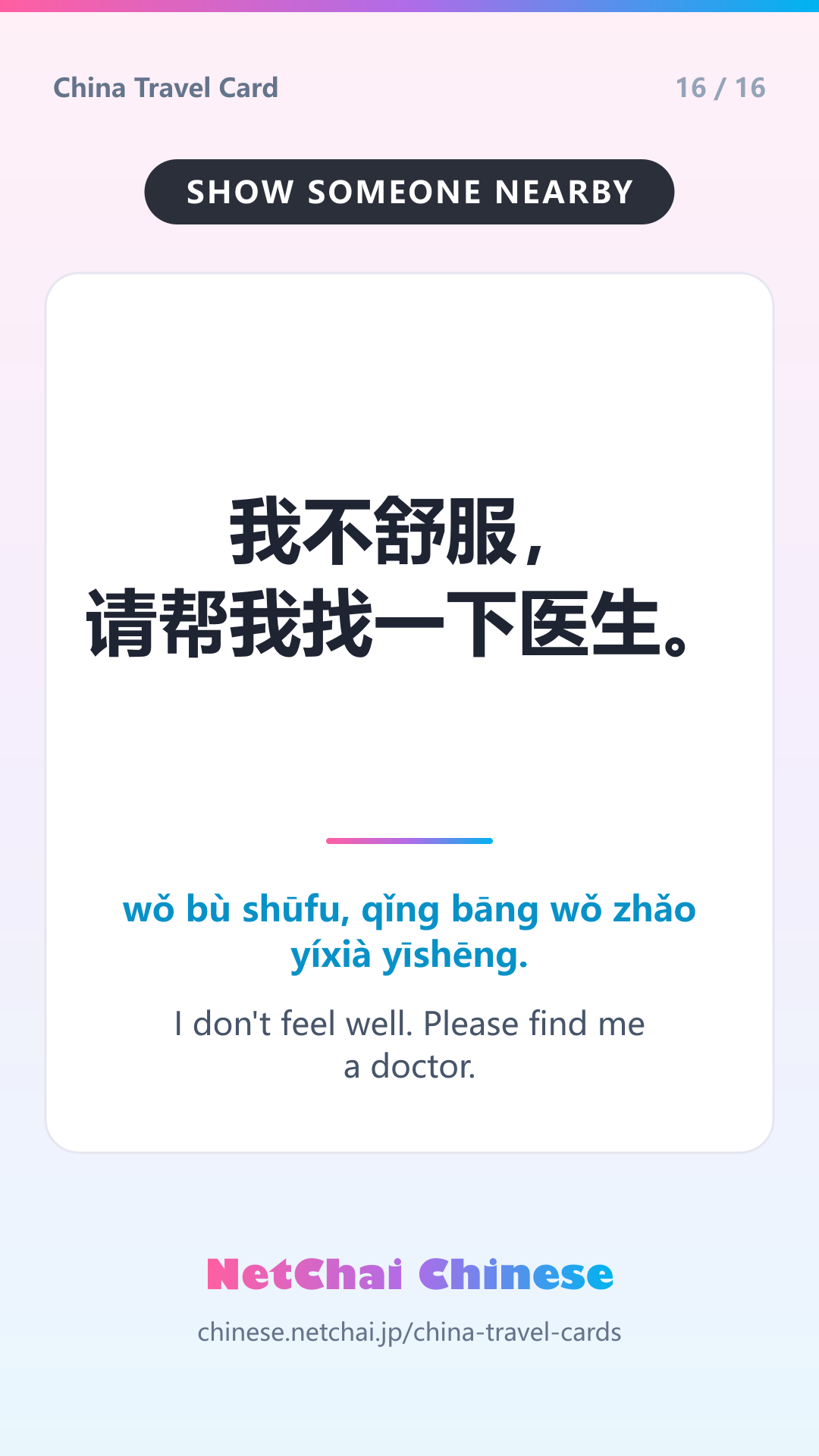
我不舒服,请帮我找一下医生。
wǒ bù shūfu, qǐng bāng wǒ zhǎo yíxià yīshēng.
I don't feel well. Please find me a doctor.
In an emergency, the ambulance number in mainland China is 120.
Want to say more than 16 phrases?
- 120 Chinese travel phrases by scene — taxis, hotels, restaurants, shopping and emergencies, all with audio.
- 200 everyday Chinese phrases — greetings, small talk and replies.
- Mandarin tones guide — why 买 (buy) and 卖 (sell) are different words.
- Pinyin converter — paste any Chinese text and see how to read it.