摔倒了?不疼不疼
shuāidǎo le? bù téng bu téng
Did you fall it's okay, it's okay
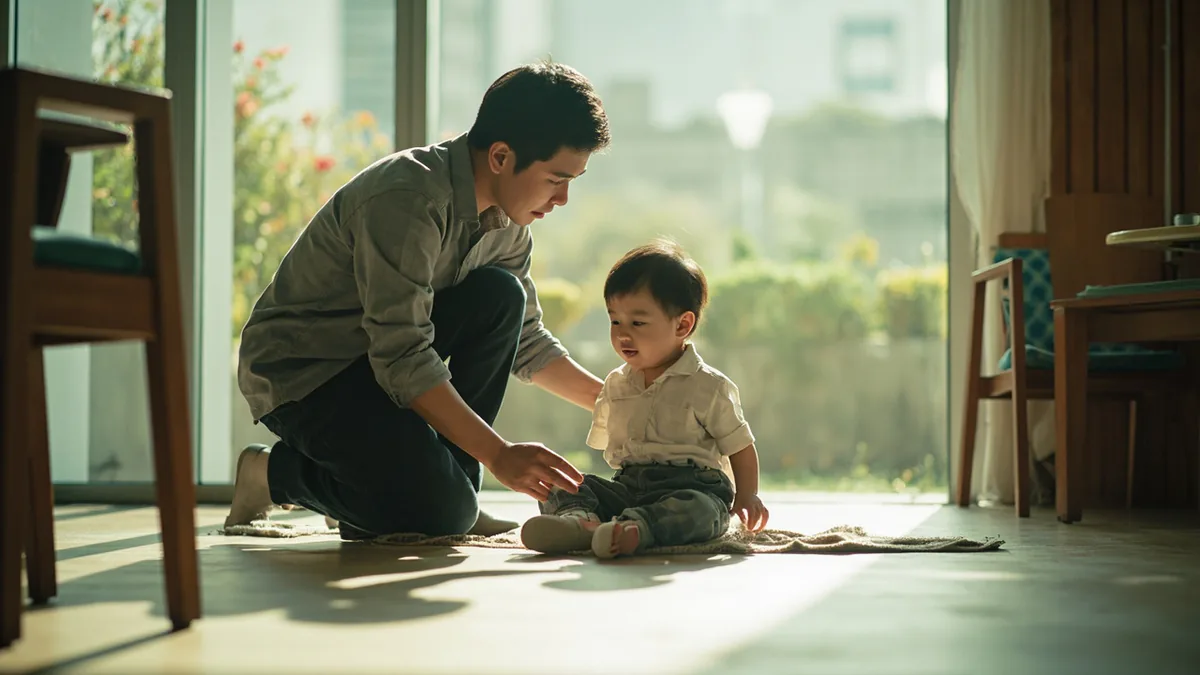
摔倒了?不疼不疼 (shuāidǎo le? bù téng bu téng) is a comforting phrase used by adults to soothe a child who has fallen or gotten a minor injury. It acts as a gentle 'magic incantation' to reassure them that the pain isn't severe and they are okay.
What does 摔倒了?不疼不疼 (shuāidǎo le? bù téng bu téng) mean?
摔倒了?不疼不疼 (shuāidǎo le? bù téng bu téng) means “did you fall it's okay, it's okay” in English. Word for word, it breaks down as “fell down? not hurt not hurt.”
When to use it
Highly informal and affectionate, used exclusively with young children. It's a parental or caregiver's comforting response. Adults would not use this phrase with other adults.
How to pronounce it
Sounds like “shwai-DAO luh? boo TUNG buh TUNG.” 摔 is high and level, 倒 dips, 了 is light; 不 keeps its falling tone before 疼 (a second tone), and the second 不 is said lightly; 疼 rises.
Other ways to say it
- 不哭不哭bù kū bu kūdon't cry, don't cry (comforting)
- 没关系méi guānxiit's okay / never mind
- 没事儿méi shìrit's nothing / no problem
Examples
摔倒了?不疼不疼,我们起来继续玩!
shuāidǎo le? bù téng bu téng, wǒmen qǐlai jìxù wán!
Did you fall? It's okay, it's okay, let's get up and keep playing!
宝宝摔倒了?不疼不疼,妈妈抱抱。
bǎobao shuāidǎo le? bù téng bu téng, māma bàobao.
Baby fell? It's okay, it's okay, Mommy will hug you.
别怕,摔倒了?不疼不疼,勇敢一点!
bié pà, shuāidǎo le? bù téng bu téng, yǒnggǎn yìdiǎn!
Don't be scared, did you fall? It's okay, it's okay, be brave!
Pro tip: The repetition of 不疼 (bù téng) is key to its comforting effect, emphasizing reassurance rather than a literal statement about pain. 不 keeps its falling tone here (bù), because 疼 (téng) is a second tone. 不 only changes to bú before a fourth tone, as in 不怕 (bú pà).
Related phrases
不怕不怕 · There, there — don't be scared没事了 · It's all better now站起来 · Stand up
Want to speak Chinese for real?
Start a free lesson with a native teacher →
Start a free lesson with a native teacher →