吃饭了!
chīfàn le!
Time to eat · trad. 吃飯了!
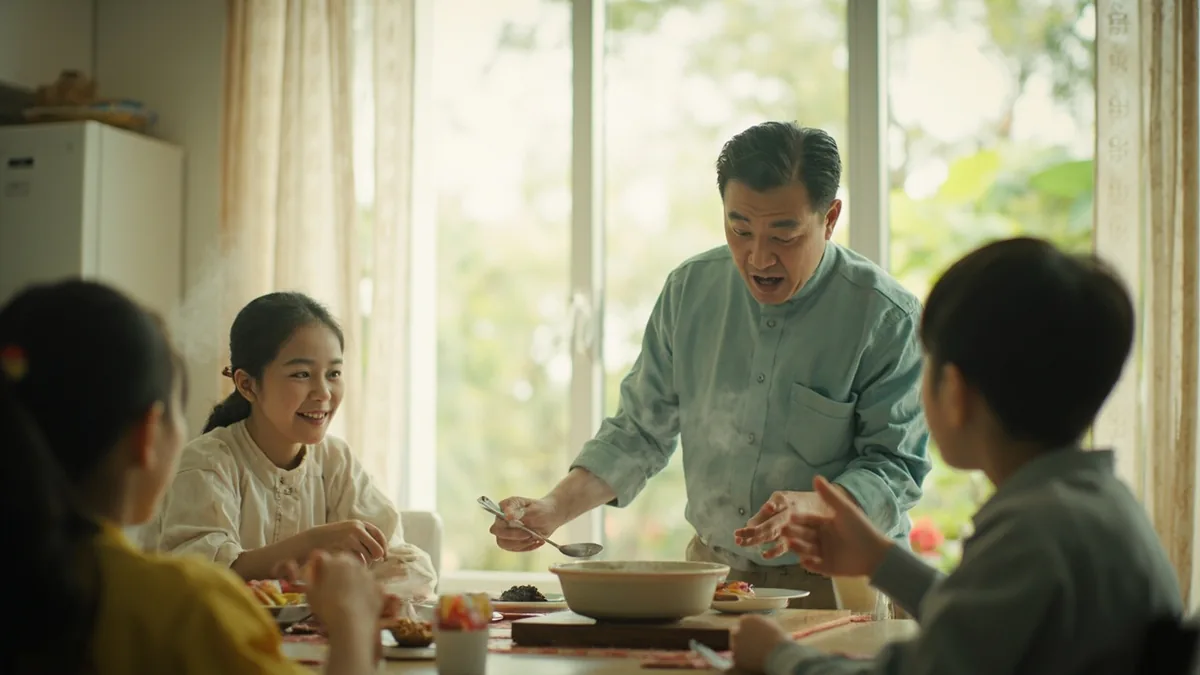
吃饭了! (chī fàn le) is a common phrase used to announce that a meal is ready and it's time to eat. It's often called out to family members, especially children, to gather them for a meal.
What does 吃饭了! (chīfàn le!) mean?
吃饭了! (chīfàn le!) means “time to eat” in English. Word for word, it breaks down as “eat meal particle!”
When to use it
Casual and warm. It's typically used within a family or among close friends. For a more formal announcement, one might say 饭准备好了 (fàn zhǔnbèi hǎo le), "The meal is ready."
How to pronounce it
Sounds like “chrr-FAN-luh.” The first syllable is a high-flat tone, the second is a falling tone, and the third is a light, neutral tone.
Other ways to say it
- 该吃饭了gāi chīfàn leIt's time to eat.
- 开饭了kāifàn leDinner is served!
- 吃饭了chīfàn leTime to eat! (playful)
Examples
妈妈喊道:“吃饭了!”孩子们立刻跑过来。
māma hǎndào: “chīfàn le!” háizi men lìkè pǎo guòlái.
Mom called, "Time to eat!" The children immediately ran over.
快点,吃饭了!别玩了。
kuàidiǎn, chīfàn le! bié wán le.
Hurry up, time to eat! Stop playing.
你饿了吗?我们吃饭了。
nǐ è le ma? wǒmen chīfàn le.
Are you hungry? We're eating now.
Pro tip: The particle 了 in 吃饭了 indicates a new situation or the imminent start of an action, making it a natural call to the table.
Related phrases
刷牙 · Brush your teeth洗手 · Wash your hands饿不饿? · Are you hungry
Want to speak Chinese for real?
Start a free lesson with a native teacher →
Start a free lesson with a native teacher →