放学了
fàngxué le
School's out · trad. 放學了
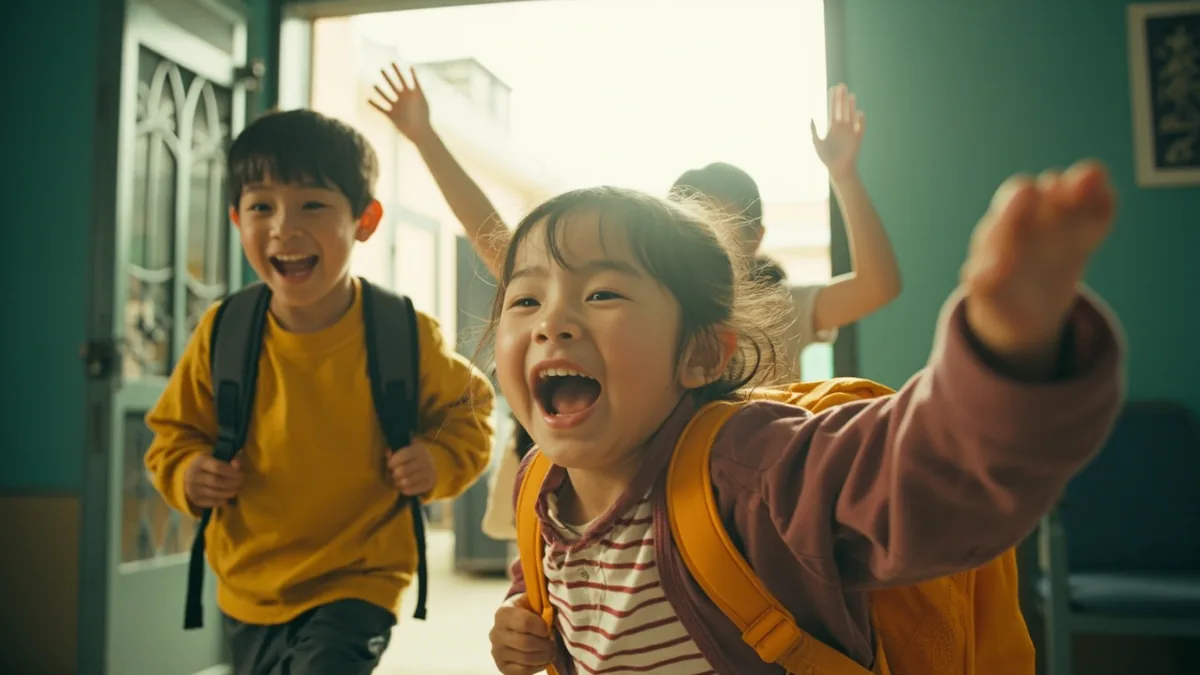
放学了 (fàngxué le) means “school's out” or “school is dismissed.” It's a common and joyful phrase used by students when their school day has ended.
What does 放学了 (fàngxué le) mean?
放学了 (fàngxué le) means “school's out” in English. Word for word, it breaks down as “release school (completed action).”
When to use it
Neutral and common. It's typically used by students or when talking about students finishing school. For “class is over,” use 下课了 (xiàkè le).
How to pronounce it
Sounds like “FUNG-shweh luh.” The first syllable is a falling tone, the second is a rising tone, and 了 is a light, neutral tone.
Other ways to say it
- 放学fàngxuéto finish school / school's out
- 下课了xiàkè leclass is over
- 放假了fàngjià leholiday/vacation starts
Examples
放学了,我们可以回家了!
fàngxué le, wǒmen kěyǐ huíjiā le!
School's out, we can go home!
你什么时候放学?
nǐ shénme shíhou fàngxué?
When do you get out of school?
孩子们一听到铃声,就知道放学了。
háizi men yī tīngdào língshēng, jiù zhīdào fàngxué le.
As soon as the children heard the bell, they knew school was out.
Pro tip: The particle 了 here indicates the completion of an action or a change of state, often conveying a sense of relief or happiness, making it “the happiest 了 of the day” for students.
Related phrases
整理书包 · Pack your school bag写作业了 · Time for homework今天在学校怎么样? · How was school today
Want to speak Chinese for real?
Start a free lesson with a native teacher →
Start a free lesson with a native teacher →