不要香菜
bùyào xiāngcài
No cilantro, please
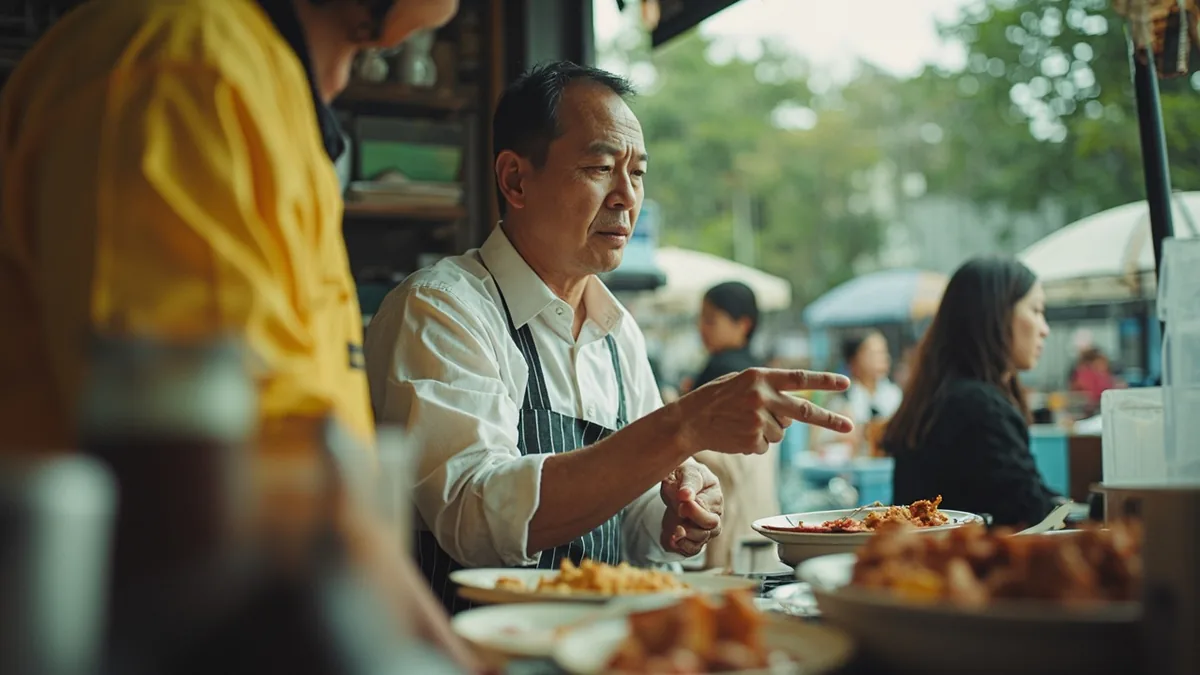
不要香菜 (bú yào xiāngcài) means 'no cilantro, please'. It is a vital phrase for anyone who dislikes cilantro, as this herb is frequently used as a garnish in many Chinese dishes.
What does 不要香菜 (bùyào xiāngcài) mean?
不要香菜 (bùyào xiāngcài) means “no cilantro, please” in English. Word for word, it breaks down as “don't want cilantro.”
When to use it
Neutral and direct. This phrase is polite enough for ordering food in most restaurant settings. For extra politeness, you can add 谢谢 (xièxie, 'thank you') at the end.
How to pronounce it
Sounds like “boo-YOW SHYAHNG-tsai.” 不 is said rising (bú) because 要, a fourth tone, follows; 要 falls; 香 is high and level; 菜 falls.
Other ways to say it
- 请不要香菜qǐng bùyào xiāngcàiplease no cilantro
- 不要加香菜bùyào jiā xiāngcàidon't add cilantro
- 我不要香菜wǒ bùyào xiāngcàiI don't want cilantro
Examples
我点一份面,不要香菜。
wǒ diǎn yí fèn miàn, bùyào xiāngcài.
I'll order a bowl of noodles, no cilantro.
麻烦你,我的汤不要香菜。
máfan nǐ, wǒ de tāng bùyào xiāngcài.
Excuse me, please, no cilantro in my soup.
这个菜不要香菜,谢谢。
zhège cài bùyào xiāngcài, xièxie.
This dish, no cilantro, thank you.
Pro tip: Even if a dish isn't explicitly listed with cilantro, it's often added as a garnish, so it's wise to specify '不要香菜' if you dislike it.
Related phrases
要冰的 · Cold one, please要热的 · Hot one, please好辣! · So spicy
Want to speak Chinese for real?
Start a free lesson with a native teacher →
Start a free lesson with a native teacher →