妈妈
māma
Mom · trad. 媽媽
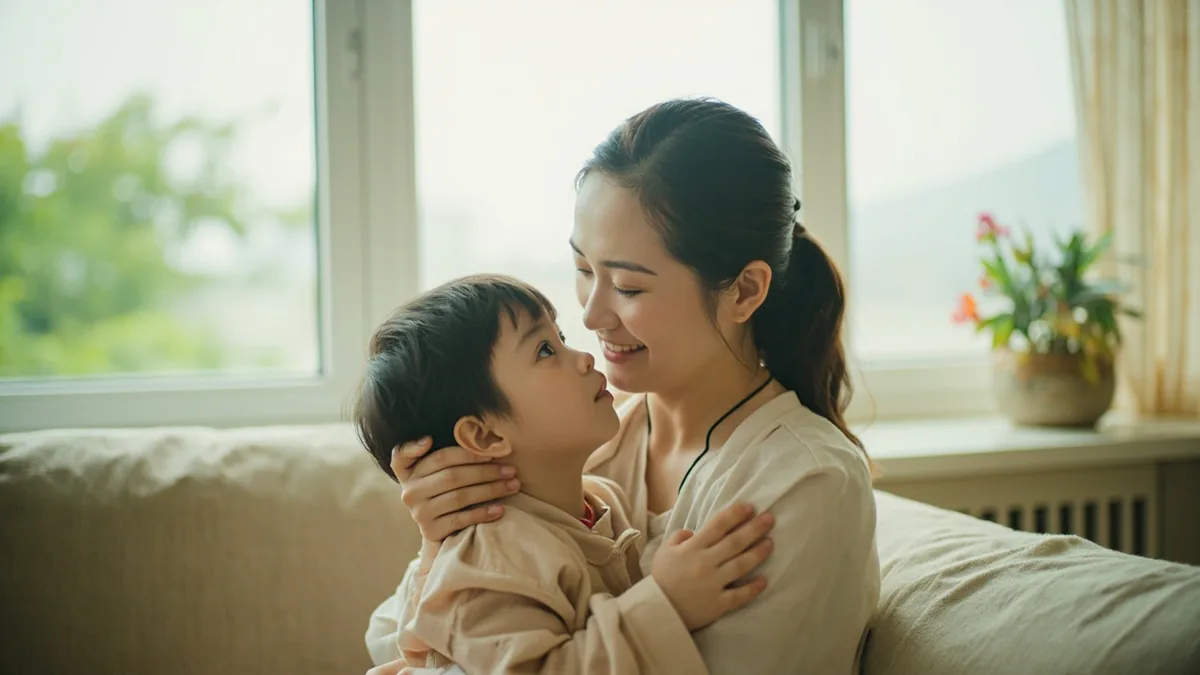
妈妈 (māma) is the most common and affectionate way to say 'mom' or 'mother' in Mandarin Chinese. It's widely used by children and adults alike in everyday conversation.
What does 妈妈 (māma) mean?
妈妈 (māma) means “mom” in English. Word for word, it breaks down as “ma ma.”
When to use it
Neutral and affectionate. For a more formal term, especially in writing or official contexts, use 母亲 (mǔqīn). A shorter, more casual form is 妈 (mā). When addressing another person's mother, especially if you're younger, you might use 阿姨 (āyí, 'auntie') out of politeness.
How to pronounce it
Sounds like “MAH-mah.” The first 'ma' is a high, flat tone, and the second 'ma' is said very lightly, almost like a whisper.
Other ways to say it
- 母亲mǔqīnmother (formal)
- 妈māmom (casual / short)
- 老妈lǎomāold mom (affectionate / casual)
Examples
妈妈,我爱你!
māma, wǒ ài nǐ!
Mom, I love you!
我妈妈做的饭很好吃。
wǒ māma zuò de fàn hěn hǎochī.
The food my mom makes is delicious.
妈妈,我可以出去玩吗?
māma, wǒ kěyǐ chūqù wán ma?
Mom, can I go out and play?
Watch it in 20 seconds
A short animated clip with Xiao Jin, our monkey mascot — the phrase, an example, and native audio.
Pro tip: The second character in 妈妈 (ma) is a neutral tone, meaning it's pronounced softly and quickly without a distinct tone. This light pronunciation is key to sounding natural and affectionate.
Related phrases
爸爸 · Dad家庭 · Family朋友 · Friend
Want to speak Chinese for real?
Start a free lesson with a native teacher →
Start a free lesson with a native teacher →