压岁钱
yāsuìqián
Lucky money · trad. 壓歲錢
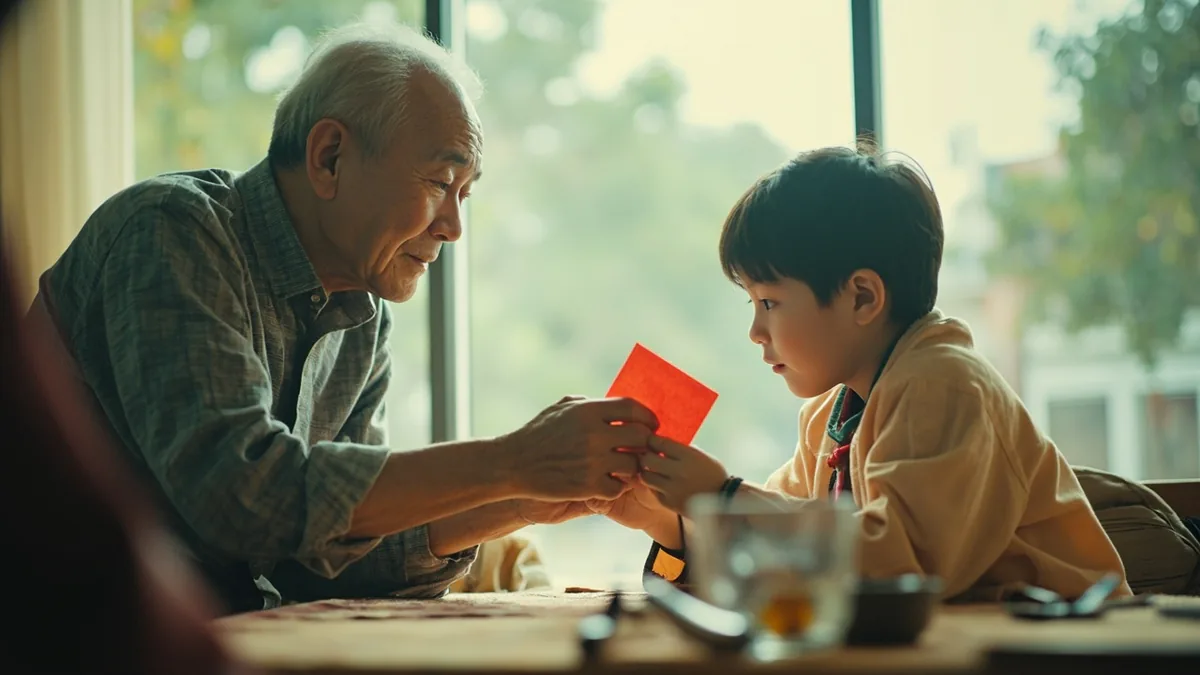
压岁钱 (yāsuìqián) is the money that elders give to children during the Chinese New Year, typically presented inside a red envelope (红包). It is a cherished tradition symbolizing good wishes and blessings for the coming year.
What does 压岁钱 (yāsuìqián) mean?
压岁钱 (yāsuìqián) means “lucky money” in English. Word for word, it breaks down as “suppress age money.”
When to use it
Culturally specific and neutral. It is a central part of Lunar New Year celebrations. When receiving 压岁钱, children usually thank their elders with a polite 谢谢 (xièxie) or a specific address like 谢谢爷爷奶奶 (xièxie yéye nǎinai, 'thank you grandpa and grandma').
How to pronounce it
Sounds like “yah-SWAY-chyen.” The first syllable is a high, flat tone, the second is a falling tone, and the third is a rising tone.
Other ways to say it
- 红包hóngbāored envelope (often containing lucky money)
- 给压岁钱gěi yāsuìqiánto give lucky money
- 收压岁钱shōu yāsuìqiánto receive lucky money
Examples
过年的时候,长辈会给孩子们压岁钱。
guònián de shíhou, zhǎngbèi huì gěi háizimen yāsuìqián.
During the New Year, elders give lucky money to children.
我小时候最喜欢收压岁钱了。
wǒ xiǎoshíhou zuì xǐhuan shōu yāsuìqián le.
When I was little, I loved receiving lucky money the most.
你今年收到多少压岁钱?
nǐ jīnnián shōudào duōshao yāsuìqián?
How much lucky money did you receive this year?
Pro tip: 压岁钱 specifically refers to the money given at New Year, while 红包 (hóngbāo) is the red envelope itself, which can contain any gift of money, not just New Year lucky money.
Related phrases
年糕 · New year cake (nian gao)汤圆 · Sweet rice balls (tang yuan)年夜饭 · Reunion dinner
Want to speak Chinese for real?
Start a free lesson with a native teacher →
Start a free lesson with a native teacher →