牵着我的手
qiānzhe wǒ de shǒu
Hold my hand · trad. 牽著我的手
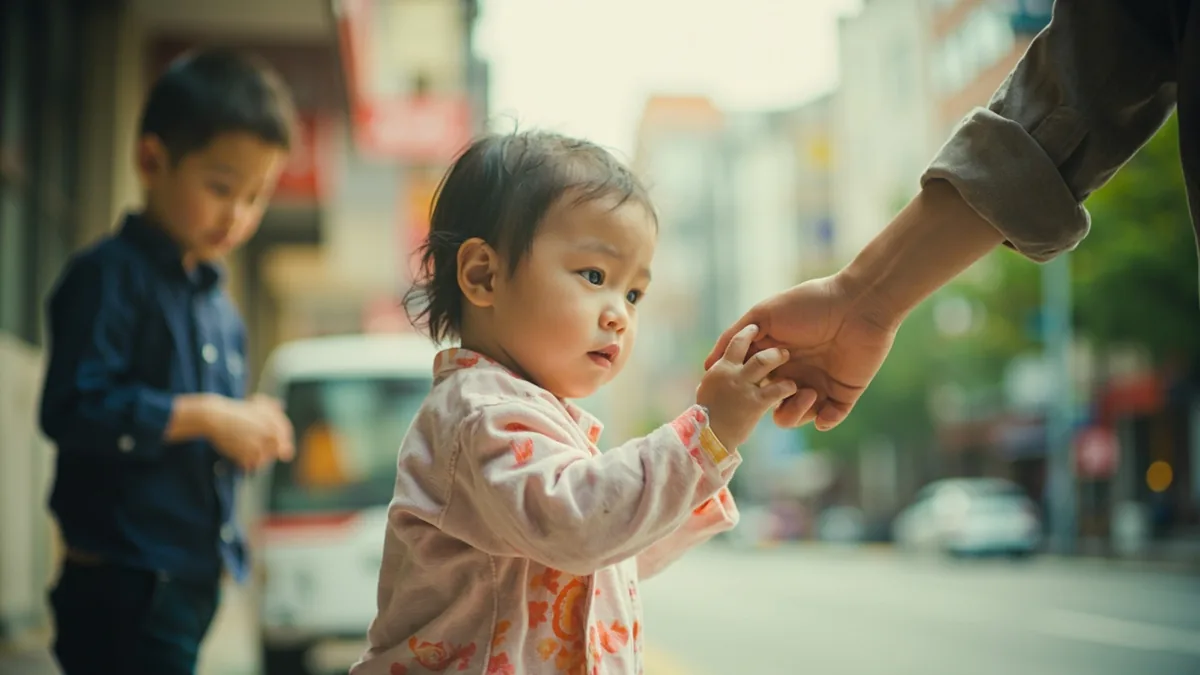
牵着我的手 (qiān zhe wǒ de shǒu) means "hold my hand," often implying a protective or guiding hold, like when a parent leads a child across the street. It conveys a sense of care and security.
What does 牵着我的手 (qiānzhe wǒ de shǒu) mean?
牵着我的手 (qiānzhe wǒ de shǒu) means “hold my hand” in English.
When to use it
Neutral and commonly used between parents and children, or between romantic partners. It suggests a gentle, reassuring connection.
How to pronounce it
Sounds like “chyen-zuh-WOH-duh-shoh.” The first syllable is a high, flat tone, and the “zhe” and “de” are light, neutral tones. The “wǒ” and “shǒu” are third tones, which dip and rise.
Other ways to say it
- 牵手qiānshǒuto hold hands (general action)
- 拉着我的手lāzhe wǒ de shǒuhold my hand (more like grasping)
- 抓住我的手zhuāzhù wǒ de shǒugrab my hand (more urgent)
Examples
过马路时,请牵着我的手。
guòmǎlù shí, qǐng qiānzhe wǒ de shǒu.
When crossing the road, please hold my hand.
他喜欢牵着我的手散步。
tā xǐhuān qiānzhe wǒ de shǒu sànbù.
He likes to walk holding my hand.
孩子,牵着妈妈的手,我们一起走。
háizi, qiānzhe māma de shǒu, wǒmen yīqǐ zǒu.
Child, hold Mommy's hand, let's walk together.
Pro tip: 牵 (qiān) specifically implies leading or guiding someone by the hand, often for protection or support, rather than just a casual hand-holding.
Related phrases
小心点 · Be careful, sweetie慢点跑 · Slow down (running)听妈妈的话 · Listen to mommy
Want to speak Chinese for real?
Start a free lesson with a native teacher →
Start a free lesson with a native teacher →