狗
gǒu
Dog
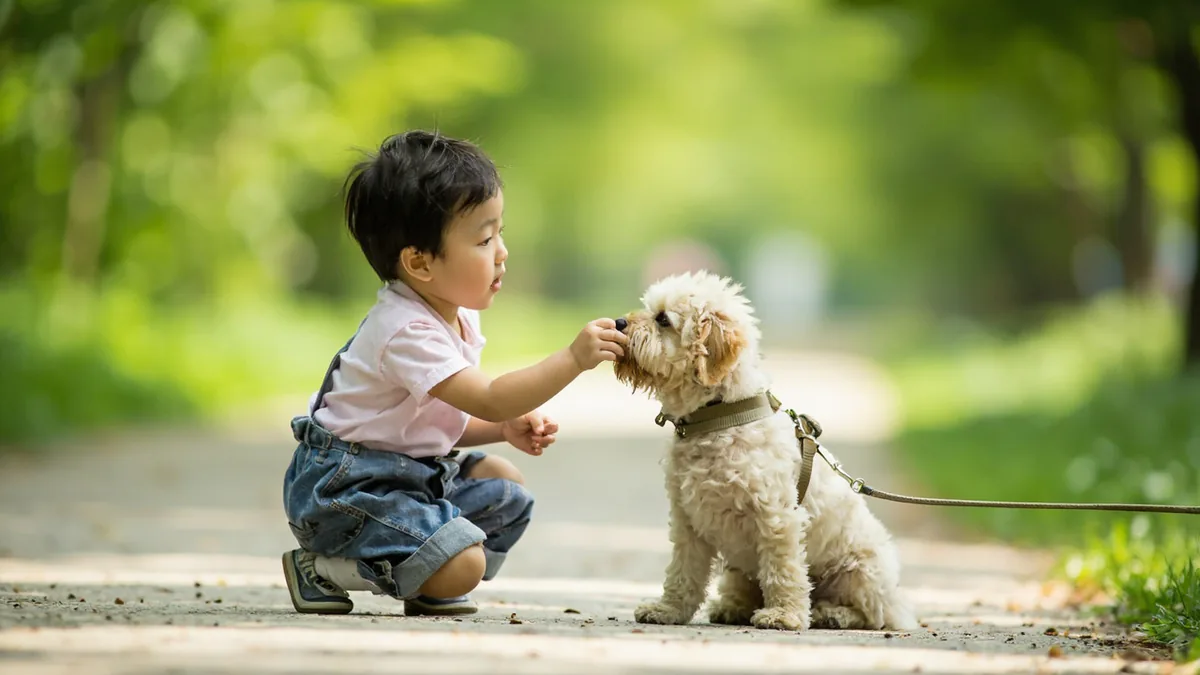
狗 (gǒu) is the standard and most common word for 'dog' in Mandarin Chinese. It's used for dogs of all sizes and breeds, whether they are pets or strays.
What does 狗 (gǒu) mean?
狗 (gǒu) means “dog” in English.
When to use it
Neutral. For a puppy or a small dog, you can say 小狗 (xiǎogǒu). When speaking affectionately about a pet, especially to children or the pet itself, 狗狗 (gǒugou) is often used. To specify a 'pet dog,' you can use 宠物狗 (chǒngwùgǒu).
How to pronounce it
Sounds like 'go' but with a sharp, falling tone. Imagine saying 'go!' very emphatically, with your voice dropping quickly.
Other ways to say it
- 小狗xiǎo gǒupuppy / small dog
- 狗狗gǒugoudoggy (affectionate)
- 宠物狗chǒngwù gǒupet dog
Examples
我家里有一只狗。
wǒ jiālǐ yǒu yì zhī gǒu.
I have a dog at home.
这只狗很聪明。
zhè zhī gǒu hěn cōngmíng.
This dog is very smart.
小狗喜欢在公园里玩。
xiǎo gǒu xǐhuan zài gōngyuán lǐ wán.
Puppies like to play in the park.
Watch it in 20 seconds
A short animated clip with Xiao Jin, our monkey mascot — the phrase, an example, and native audio.
Pro tip: When counting dogs or referring to 'a dog,' remember to use the classifier 只 (zhī). For example, 一只狗 (yī zhī gǒu) means 'one dog.' You can't just say '一狗'.
Related phrases
书 · Book奶酪 · Cheese阿姨 · Aunt
Want to speak Chinese for real?
Start a free lesson with a native teacher →
Start a free lesson with a native teacher →