赏月
shǎngyuè
Admire the moon · trad. 賞月
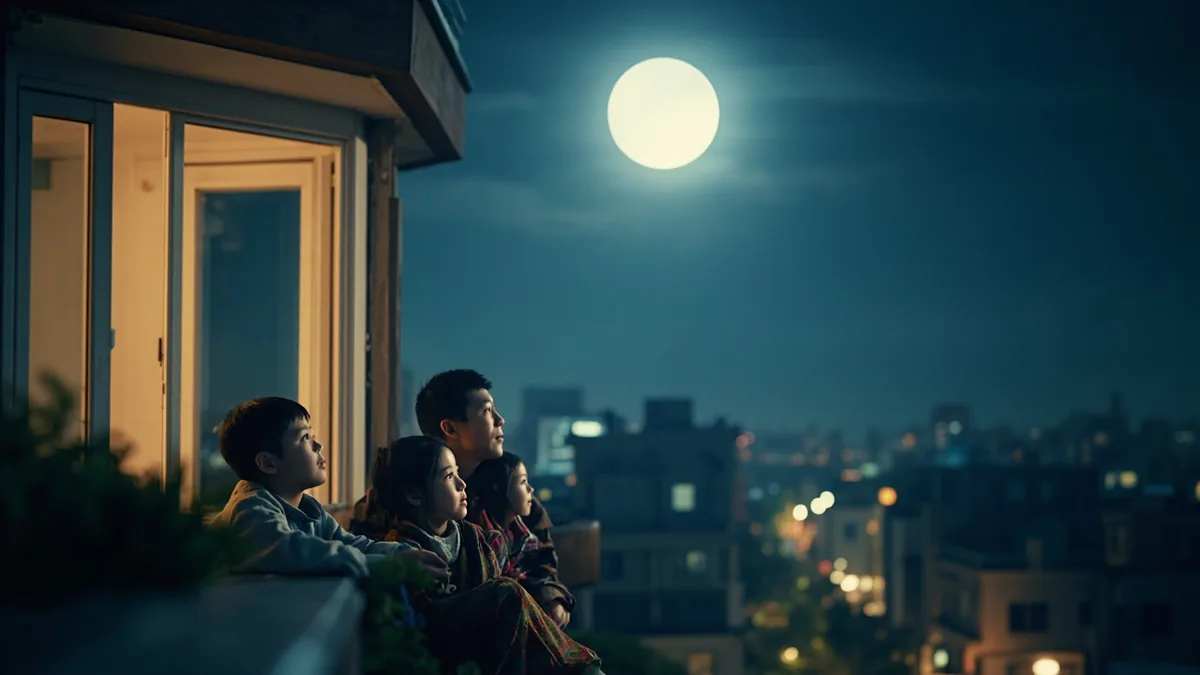
赏月 (shǎngyuè) means to admire or appreciate the moon, a popular activity especially during the Mid-Autumn Festival when families gather to enjoy the full moon.
What does 赏月 (shǎngyuè) mean?
赏月 (shǎngyuè) means “admire the moon” in English. Word for word, it breaks down as “admire moon.”
When to use it
Neutral and culturally significant. It's a traditional activity, often done with family and friends, especially during the Mid-Autumn Festival.
How to pronounce it
Sounds like “SHAHNG-yweh.” The first syllable has a dipping-rising tone, and the second is a sharp falling tone.
Other ways to say it
- 中秋节ZhōngqiūjiéMid-Autumn Festival
- 看月亮kàn yuèlianglook at the moon (general)
- 月饼yuèbǐngmooncake
Examples
中秋节的时候,我们一家人喜欢一起赏月。
Zhōngqiūjié de shíhou, wǒmen yī jiārén xǐhuan yīqǐ shǎngyuè.
During the Mid-Autumn Festival, our family likes to admire the moon together.
今晚的月亮真圆,很适合赏月。
Jīnwǎn de yuèliang zhēn yuán, hěn shìhé shǎngyuè.
Tonight's moon is so round, it's very suitable for admiring.
他们一边吃月饼,一边赏月。
Tāmen yībiān chī yuèbǐng, yībiān shǎngyuè.
They ate mooncakes while admiring the moon.
Pro tip: 赏月 is more than just 'looking at the moon'; it implies a cultural appreciation and enjoyment of the moon's beauty, often with food and company.
Related phrases
中秋节快乐 · Happy mid-autumn festival中秋节 · Mid-autumn festival月饼 · Mooncake
Want to speak Chinese for real?
Start a free lesson with a native teacher →
Start a free lesson with a native teacher →