兴高采烈
xìng gāo cǎi liè
Great joy and excitement · trad. 興高采烈
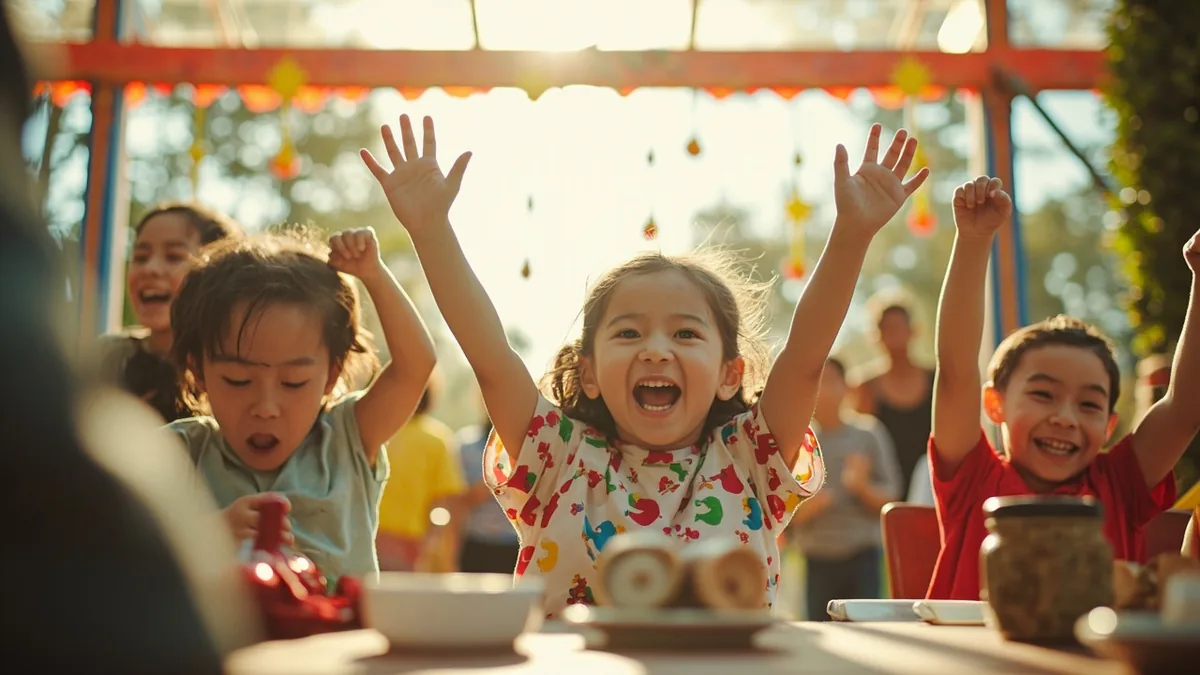
Describes a state of extreme joy, excitement, and enthusiasm. People are visibly in high spirits, often showing their delight through their actions and expressions. It conveys a sense of elation and happiness.
What does 兴高采烈 (xìng gāo cǎi liè) mean?
兴高采烈 (xìng gāo cǎi liè) means "great joy and excitement" in English. Word for word, it breaks down as "spirits high, vigor intense."
Character by character
- 兴 xìng spirit, mood
- 高 gāo high
- 采 cǎi spirit, vigor
- 烈 liè intense, ardent
When to use it
Used to depict someone or a group as being overjoyed and in high spirits, typically in response to a happy occasion, success, or pleasant activity. It's often accompanied by lively actions or expressions. The term is positive and widely applicable to everyday situations.
Example
庆"六一"的游园活动中,同学们兴高采烈地玩了许多游戏。
Qìng "liùyī" de yóuyuánhuódòng zhōng, tóngxuémen xìng gāo cǎi liè de wán le xǔduō yóuxì.
During the Children's Day fair celebrating June 1st, the students enthusiastically played many games.
Pro tip: Focuses on the emotional state of being thrilled and delighted, often implying a visible display of this happiness. It describes a mood rather than an action.
Related idioms
习以为常 · Become accustomed to小心翼翼 · Meticulous carefulness胸有成竹 · Full confidence from preparation
Want to speak Chinese for real?
Start a free lesson with a native teacher →
Start a free lesson with a native teacher →