零食
língshí
Snack
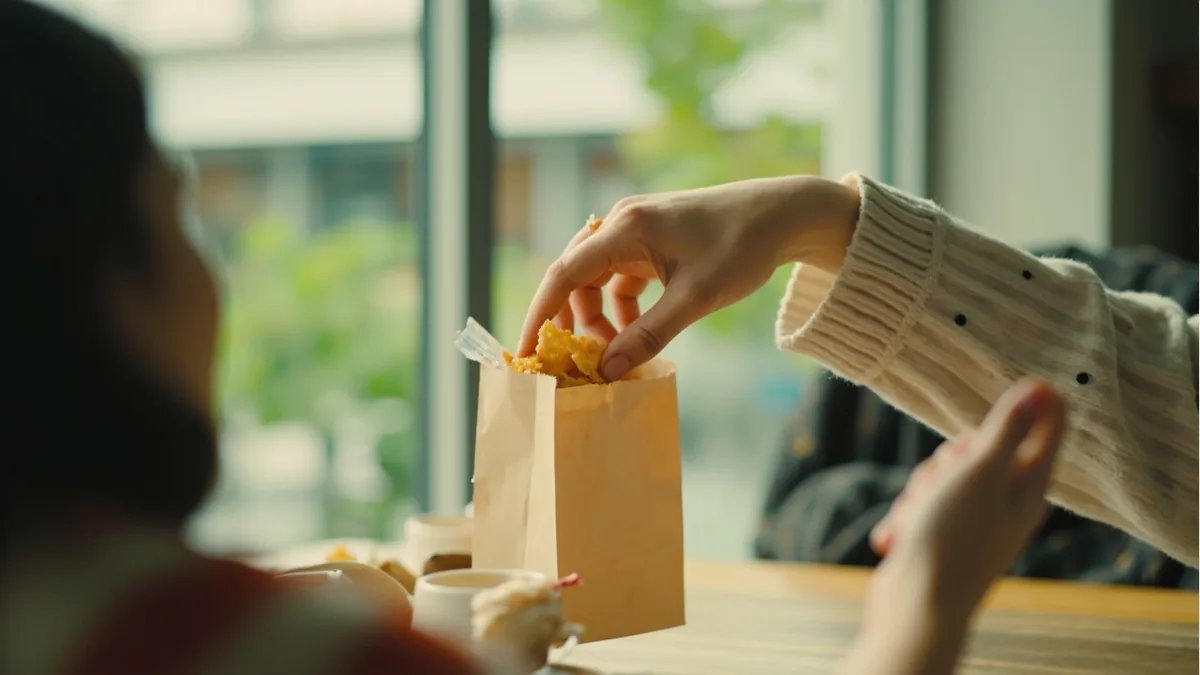
零食 (língshí) is the most common word for 'snack' in Mandarin Chinese. It refers to food eaten between meals, often for pleasure or to satisfy a craving, rather than as a main meal. This can include anything from chips and cookies to fruit or nuts.
What does 零食 (língshí) mean?
零食 (língshí) means “snack” in English. Word for word, it breaks down as “scattered food / odd food.”
When to use it
Neutral. 零食 is a general term for snack foods. For specific types of snacks, you might use 点心 (diǎnxīn) for pastries or desserts, or 小吃 (xiǎochī) for small savory dishes, often street food.
How to pronounce it
Sounds roughly like “LING-shir.” Both syllables are rising tones. The “shir” is like the “sh” in “she” followed by a soft “r” sound, similar to the “er” in “her” but without a strong 'r' at the end.
Other ways to say it
- 点心diǎnxīnpastries, desserts, dim sum (often sweet snacks)
- 小吃xiǎochīsmall eats, street food (can be savory snacks or light meals)
- 零嘴língzuǐsnack (more casual, often refers to small bites)
Examples
我喜欢吃零食。
wǒ xǐhuan chī língshí.
I like to eat snacks.
你有什么零食吗?
nǐ yǒu shénme língshí ma?
Do you have any snacks?
这是我最喜欢的零食。
zhè shì wǒ zuì xǐhuan de língshí.
This is my favorite snack.
Pro tip: While 零食 is broad, it often implies packaged or ready-to-eat items like chips, candy, or fruit. 点心 and 小吃 usually refer to items that are prepared, often fresh, and can sometimes be more substantial than a typical 'snack'.
Related phrases
饺子 · Dumpling喝 · Drink龙井 · Dragon green
Want to speak Chinese for real?
Start a free lesson with a native teacher →
Start a free lesson with a native teacher →