饺子
jiǎozi
Dumpling · trad. 餃子
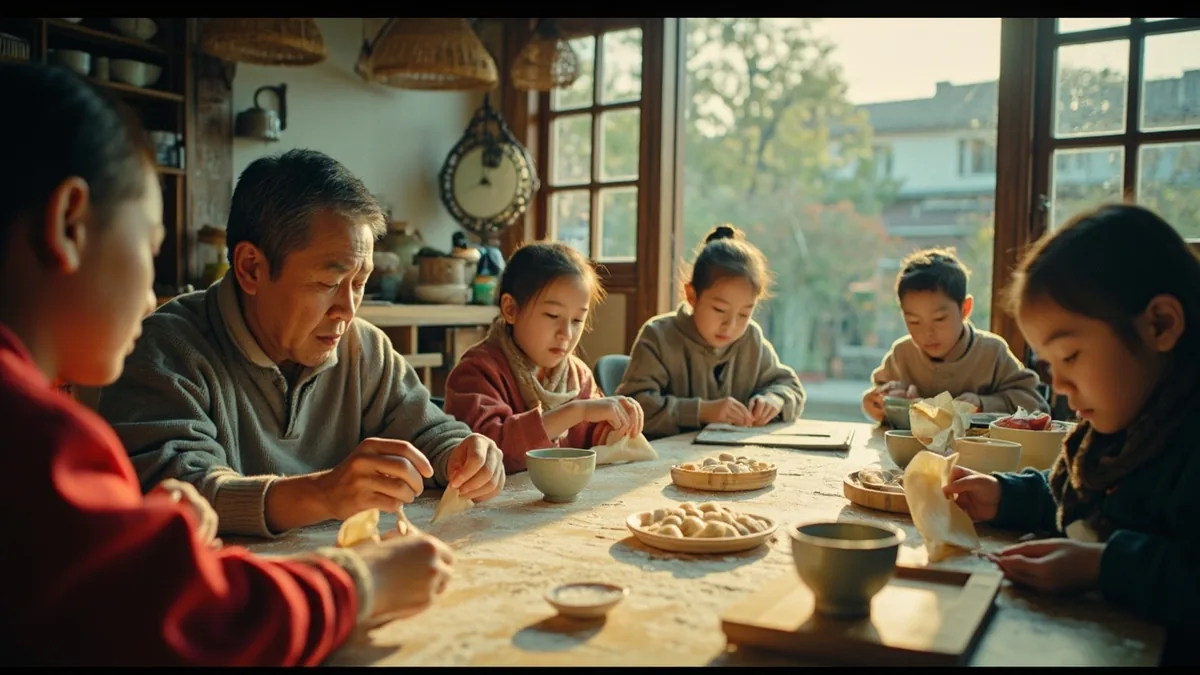
饺子 (jiǎozi) refers to the classic Chinese dumpling, typically filled with minced meat and vegetables, and often boiled, steamed, or pan-fried. It's a staple food, especially popular in Northern China and a must-have during Chinese New Year.
What does 饺子 (jiǎozi) mean?
饺子 (jiǎozi) means “dumpling” in English. Word for word, it breaks down as “dumpling child.”
When to use it
Neutral. When ordering, you might specify the cooking method: 水饺 (boiled dumplings) or 煎饺 (pan-fried dumplings/potstickers). Don't confuse 饺子 with 包子 (steamed buns) or 馄饨 (wontons), which are different types of filled dough.
How to pronounce it
Sounds like “JYAO-dzuh.” The first syllable has a falling-rising tone (third tone), and the second syllable is said lightly and quickly (neutral tone).
Other ways to say it
- 水饺shuǐjiǎoboiled dumplings
- 煎饺jiānjiǎopan-fried dumplings / potstickers
- 蒸饺zhēngjiǎosteamed dumplings
Examples
我喜欢吃饺子。
wǒ xǐhuan chī jiǎozi.
I like to eat dumplings.
我们今晚吃饺子吧!
wǒmen jīnwǎn chī jiǎozi ba!
Let's eat dumplings tonight!
这个饺子很好吃。
zhège jiǎozi hěn hǎochī.
These dumplings are very delicious.
Watch it in 20 seconds
A short animated clip with Xiao Jin, our monkey mascot — the phrase, an example, and native audio.
Pro tip: Chinese “dumplings” (饺子) are distinct from “steamed buns” (包子) and “wontons” (馄饨). 饺子 have thinner wrappers and are often crescent-shaped, while 包子 have thicker, bread-like dough, and 馄饨 are usually smaller and served in soup.
Related phrases
年夜饭 · Reunion dinner年糕 · New year cake (nian gao)零食 · Snack
Want to speak Chinese for real?
Start a free lesson with a native teacher →
Start a free lesson with a native teacher →