内心平静
nèi xīn píng jìng
Inner peace · trad. 內心平靜
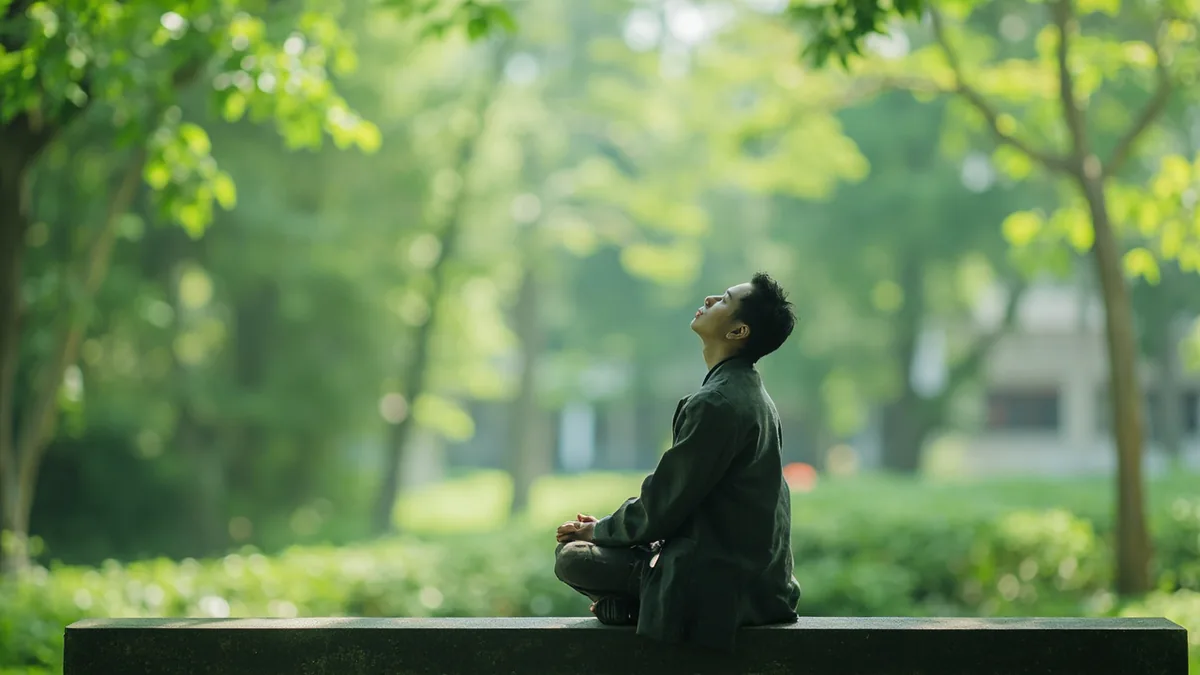
内心平静 (nèixīn píngjìng) describes a state of mental and emotional calm, free from disturbance or worry. It's often used in discussions about mindfulness, well-being, and spiritual balance.
What does 内心平静 (nèi xīn píng jìng) mean?
内心平静 (nèi xīn píng jìng) means “inner peace” in English. Word for word, it breaks down as “inner heart calm/peaceful.”
When to use it
Neutral to slightly formal or philosophical. It's a concept rather than an everyday greeting. Similar concepts include 宁静 (níngjìng, tranquility) or 心安 (xīn'ān, peace of mind).
How to pronounce it
Sounds like “NAY-shin PING-jing.” The first syllable “nay” is a falling tone, “shin” is a high flat tone, “ping” is a rising tone, and “jing” is a falling tone.
Other ways to say it
- 内心宁静nèi xīn níng jìnginner tranquility
- 心灵平静xīn líng píng jìngpeace of mind/spirit
- 平和的心境píng hé de xīn jìnga peaceful state of mind
Examples
通过冥想,他找到了内心平静。
tōng guò míng xiǎng, tā zhǎo dào le nèi xīn píng jìng.
He found inner peace through meditation.
我渴望内心的平静。
wǒ kě wàng nèi xīn de píng jìng.
I long for inner peace.
保持内心平静对健康很重要。
bǎo chí nèi xīn píng jìng duì jiàn kāng hěn zhòng yào.
Maintaining inner peace is very important for health.
Pro tip: While 平静 (píngjìng) means calm and quiet, 宁静 (níngjìng) often implies a deeper, more serene, and undisturbed tranquility. Both are suitable for “inner peace,” but 宁静 can suggest a more profound stillness.
Related phrases
勇气和力量 · Courage and strength我说 · I speak我要 · I want
Want to speak Chinese for real?
Start a free lesson with a native teacher →
Start a free lesson with a native teacher →