玩得开心
wán de kāixīn
Have fun · trad. 玩得開心
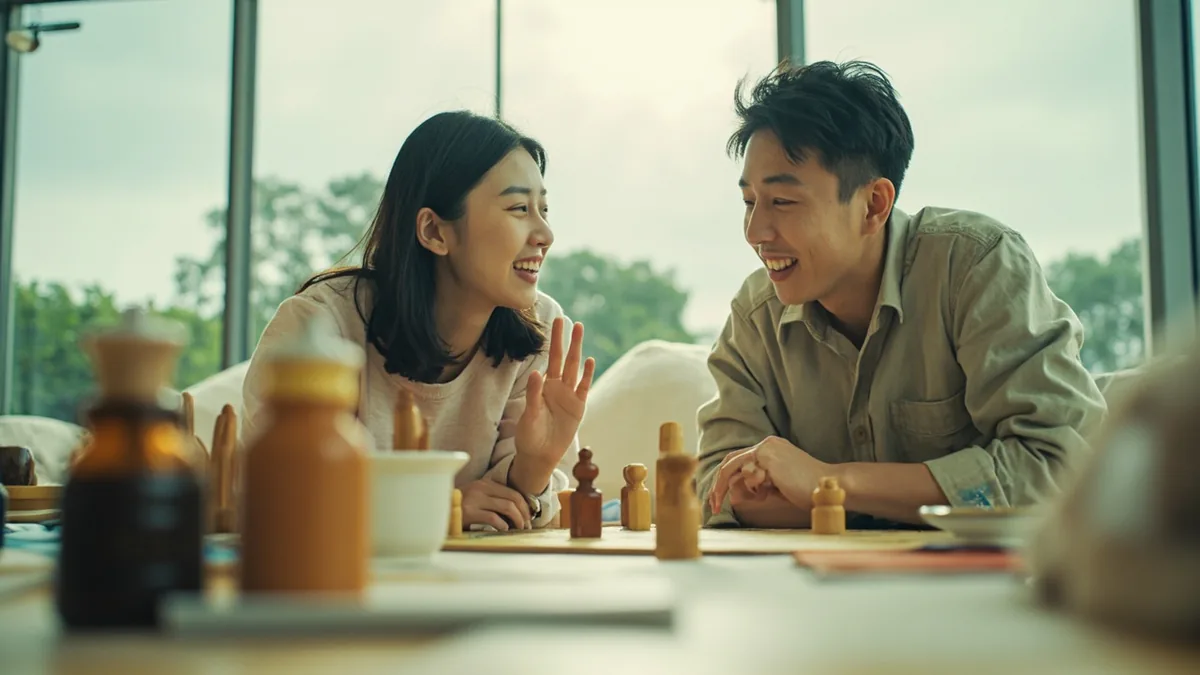
玩得开心 is the most common and natural way to tell someone to “have fun” or to express that one “had fun” in Mandarin Chinese. It's a versatile phrase used when someone is about to go do something enjoyable or to describe a past enjoyable experience.
What does 玩得开心 (wán de kāixīn) mean?
玩得开心 (wán de kāixīn) means “have fun” in English. Word for word, it breaks down as “play to a happy state.”
When to use it
Neutral. It's appropriate for friends, family, and most casual to semi-formal situations. To make it a direct wish, you can add 祝你 (“wish you”): 祝你玩得开心. When someone says this to you, a simple 谢谢 (“thank you”) is a good reply.
How to pronounce it
Sounds roughly like “wan-duh KAI-shin.” The first syllable “wan” is a rising tone, “duh” is light (neutral tone), and “kai-shin” is two flat (first tone) syllables.
Other ways to say it
- 祝你玩得开心zhù nǐ wán de kāixīnwish you have fun (more explicit wish)
- 玩得愉快wán de yúkuàihave a pleasant time (slightly more formal)
- 好好玩hǎohao wánhave a good time (more direct, often among close friends)
Examples
祝你周末玩得开心!
zhù nǐ zhōumò wán de kāixīn!
Have a fun weekend!
他们昨天玩得很开心。
tāmen zuótiān wán de hěn kāixīn.
They had a lot of fun yesterday.
去吧,玩得开心!
qù ba, wán de kāixīn!
Go on, have fun!
Watch it in 20 seconds
A short animated clip with Xiao Jin, our monkey mascot — the phrase, an example, and native audio.
Pro tip: The particle 得 is crucial here. It connects the verb 玩 (“play/have fun”) with the descriptive adjective 开心 (“happy”), indicating the *result* or *degree* of the action. Don't confuse it with the other 'de' particles, 地 or 的.
Related phrases
美好的早晨 · Blessed morning英语 · English节日快乐 · Festival wishes
Want to speak Chinese for real?
Start a free lesson with a native teacher →
Start a free lesson with a native teacher →