生日快乐
shēngrì kuàile
Happy birthday · trad. 生日快樂
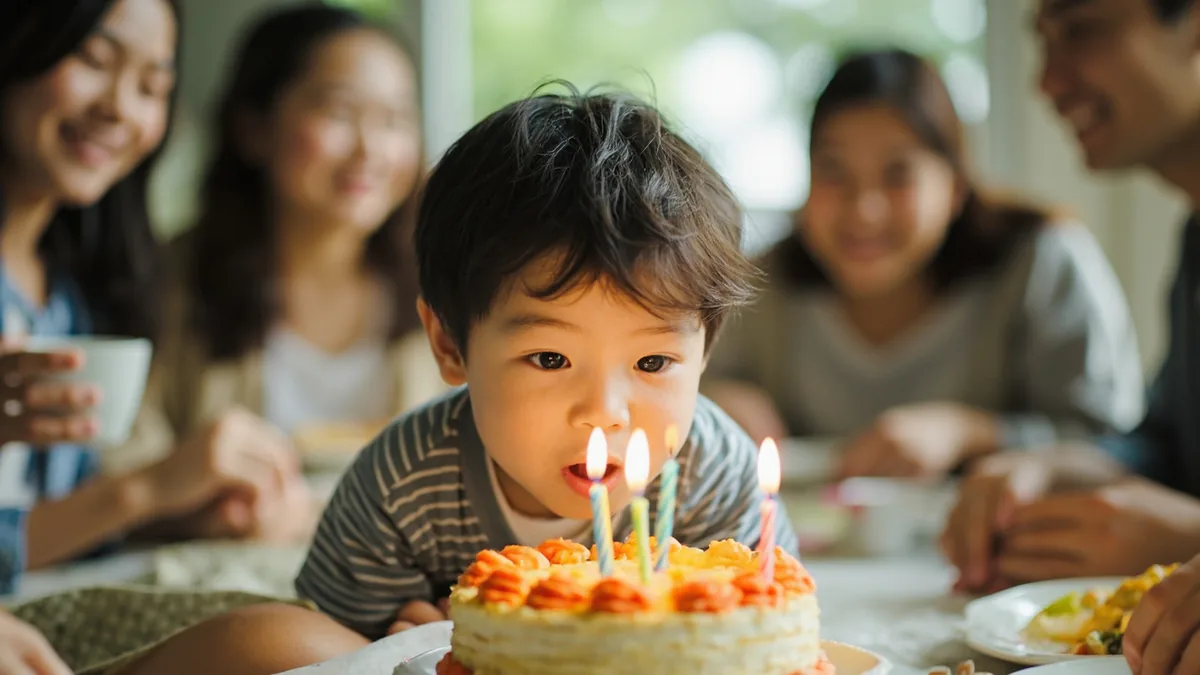
生日快乐 (shēngrì kuàilè) is the standard and most common way to say "happy birthday" in Mandarin Chinese. It's appropriate for all ages and in most social situations.
What does 生日快乐 (shēngrì kuàile) mean?
生日快乐 (shēngrì kuàile) means “happy birthday” in English. Word for word, it breaks down as “birthday happy.”
When to use it
Neutral. You can add 祝你 (zhù nǐ, "wish you") before it for a slightly more complete sentence, or 祝您 (zhù nín) for a polite form when addressing elders or superiors. When someone says it to you, a simple 谢谢 (xièxie, "thank you") is the appropriate reply.
How to pronounce it
Sounds roughly like “SHUNG-rrr KWAI-luh.” 生 is high and level, 日 falls, 快 falls, and 乐 is usually said lightly in this phrase.
Other ways to say it
- 祝你生日快乐zhù nǐ shēngrì kuàilewish you happy birthday (common, slightly more complete)
- 祝您生日快乐zhù nín shēngrì kuàilewish *you* (polite) happy birthday
Examples
生日快乐!
shēngrì kuàile!
Happy birthday!
李明,生日快乐!
Lǐ Míng, shēngrì kuàile!
Happy birthday, Li Ming!
祝你生日快乐,身体健康!
zhù nǐ shēngrì kuàile, shēntǐ jiànkāng!
Wish you a happy birthday and good health!
Watch it in 20 seconds
A short animated clip with Xiao Jin, our monkey mascot — the phrase, an example, and native audio.
Pro tip: The phrase 生日快乐 is directly translated as "birthday happy." It's commonly used as is, but adding 祝你 (zhù nǐ) meaning "wish you" makes it a full sentence, especially when writing a card or giving a more formal greeting.
Related phrases
祝您生日快乐 · Birthday wishes for elderly新年快乐 · Happy new year恭喜 · Congratulations教师节快乐 · Happy teachers day祝福你 · Bless you
Want to speak Chinese for real?
Start a free lesson with a native teacher →
Start a free lesson with a native teacher →