舞龙
wǔ lóng
Dragon dance · trad. 舞龍
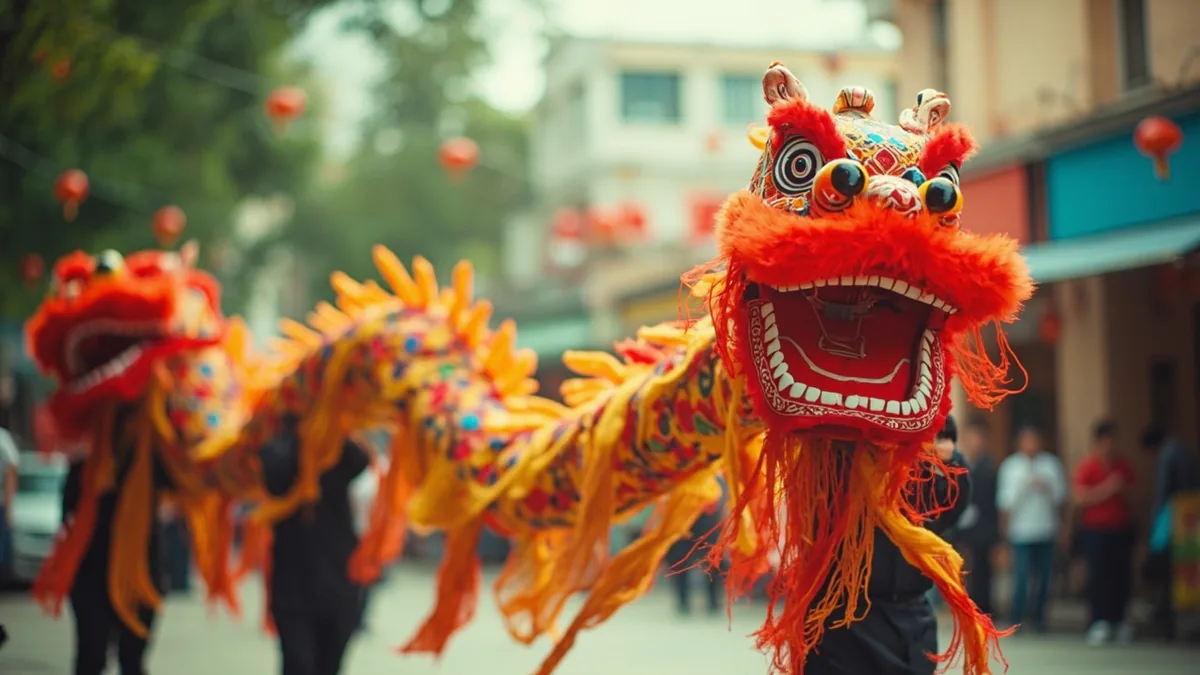
舞龙 (wǔ lóng) is a traditional Chinese performance where a long, flexible dragon puppet is skillfully manipulated by a team of performers. It's a vibrant and energetic cultural display, most famously seen during festivals like Chinese New Year, symbolizing good fortune and prosperity.
What does 舞龙 (wǔ lóng) mean?
舞龙 (wǔ lóng) means “dragon dance” in English. Word for word, it breaks down as “dance dragon.”
When to use it
Neutral and descriptive. While 舞龙 specifically means "dragon dance," it's often associated with other festive activities. For example, it's commonly performed alongside 舞狮 (wǔ shī), the lion dance.
How to pronounce it
Sounds like "woo-LONG." The first syllable "woo" is a dipping third tone, and the second syllable "LONG" is a rising second tone.
Other ways to say it
- 舞狮wǔ shīlion dance (a related traditional performance)
- 春节舞龙Chūnjié wǔ lóngChinese New Year dragon dance
Examples
每年春节,我们都会去看舞龙表演。
Měi nián Chūnjié, wǒmen dōu huì qù kàn wǔ lóng biǎoyǎn.
Every Chinese New Year, we go to watch dragon dance performances.
舞龙是中国传统文化中非常重要的一个部分。
Wǔ lóng shì Zhōngguó chuántǒng wénhuà zhōng fēicháng zhòngyào de yī gè bùfen.
Dragon dance is a very important part of traditional Chinese culture.
舞龙象征着好运和繁荣。
Wǔ lóng xiàngzhēngzhe hǎoyùn hé fánróng.
The dragon dance symbolizes good luck and prosperity.
Pro tip: In Chinese culture, the dragon is a benevolent and powerful creature, not a fearsome monster. The dragon dance is believed to bring good luck, ward off evil spirits, and ensure a good harvest.
Related phrases
龙舟 · Dragon boat china龙 · Dragon龙文化 · Culture dragon
Want to speak Chinese for real?
Start a free lesson with a native teacher →
Start a free lesson with a native teacher →