生日
shēngrì
Birthday
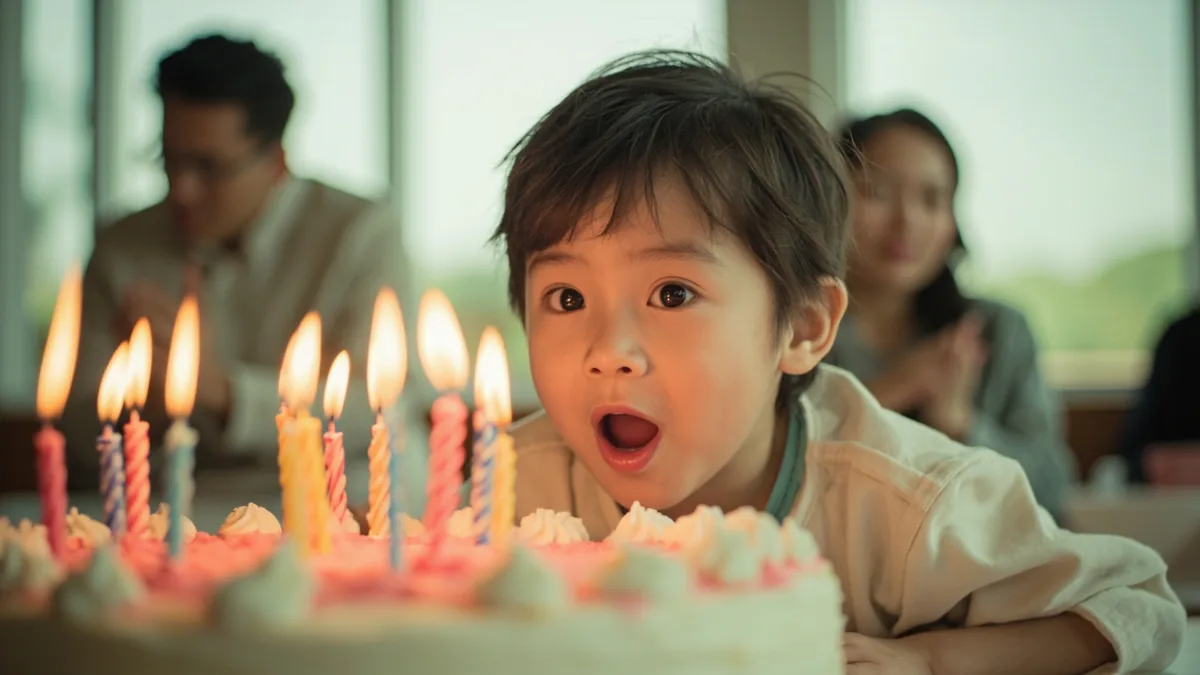
生日 (shēngrì) is the standard and most common word for "birthday" in Mandarin Chinese. It refers to the anniversary of a person's birth and is used in all contexts, from casual conversations to formal events.
What does 生日 (shēngrì) mean?
生日 (shēngrì) means “birthday” in English. Word for word, it breaks down as “birth day.”
When to use it
Neutral. The most common phrase is 祝你生日快乐 (zhù nǐ shēngrì kuàilè), meaning "Happy birthday to you." When asking someone's birthday, you might say 你什么时候过生日? (Nǐ shénme shíhou guò shēngrì?), "When do you celebrate your birthday?" or 你的生日是哪天? (Nǐ de shēngrì shì nǎ tiān?), "Which day is your birthday?".
How to pronounce it
Sounds like "shung-ruh." The first syllable 生 (shēng) is a high, flat tone, and the second syllable 日 (rì) is a sharp, falling tone.
Other ways to say it
- 生日快乐shēngrì kuàilehappy birthday
- 过生日guò shēngrìto celebrate one's birthday
Examples
祝你生日快乐!
zhù nǐ shēngrì kuàile!
Happy birthday to you!
我的生日是下个月。
wǒde shēngrì shì xià ge yuè.
My birthday is next month.
你打算怎么过生日?
nǐ dǎsuàn zěnme guò shēngrì?
How do you plan to celebrate your birthday?
Pro tip: The verb for celebrating a birthday is 过生日 (guò shēngrì), literally 'to pass one's birthday'. In Chinese culture, longevity noodles (长寿面, chángshòu miàn) are often eaten on birthdays for good luck and a long life.
Related phrases
生日愿望 · Birthday wish生日祝福 · Birthday wishes祝您生日快乐 · Birthday wishes for elderly
Want to speak Chinese for real?
Start a free lesson with a native teacher →
Start a free lesson with a native teacher →